Choosing the right generator involves balancing your power needs with your intended use, such as home backup or portable travel. Key considerations include fuel flexibility, power output quality, and the level of portability required for your specific situation.
Best overall: DuroMax XP13000EH, which offers a massive 13,000 watts of power and dual-fuel capability, making it a reliable choice for keeping a whole home running during extended outages.
Most versatile: Westinghouse 14500 Tri-Fuel, which stands out because it can run on gasoline, propane, or natural gas, giving you more options to keep the power on when fuel supplies are limited.
Best for portability: Honda EU2200i, which is ideal for those who need a lightweight, quiet power source for camping or small appliances and don’t want to deal with a heavy, bulky machine.
This guide is for anyone looking to secure reliable backup power, whether for emergency home use or off-grid adventures.
How We Picked
We compared 16 different generator listings to find the best options for various needs. Each selected product had to provide clear technical specifications, including wattage ratings, fuel types, and safety features like carbon monoxide monitoring. We removed any models that lacked essential information about their power output or included features. Our focus remained on what the manufacturer states about the product’s construction, warranty, and intended use case.
All 10 products side by side — scroll sideways to see every column.
| Top Pick | Best for Tri-Fuel | Best for Quiet Power | Best for Battery Power | Best for RV Trips | Best for Open Frames | Best for Long Runtimes | Best for Electronics | |||
| Preview |  |  |  | 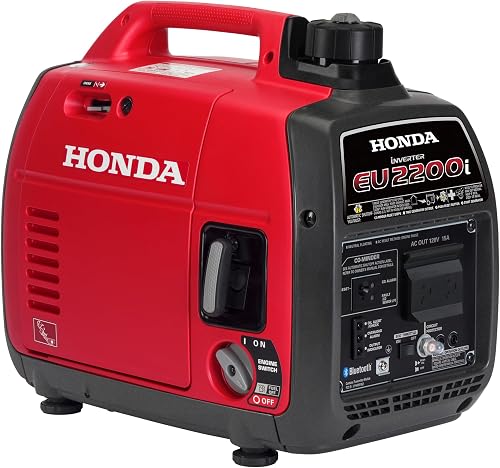 | 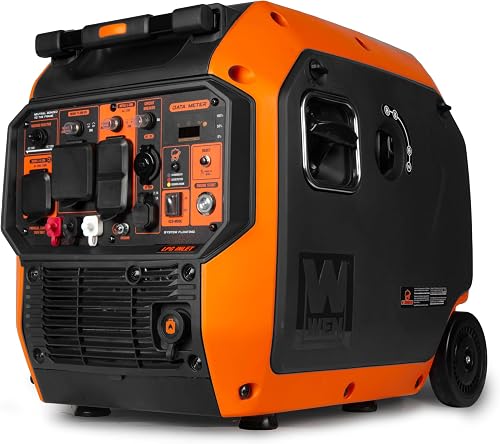 |  | 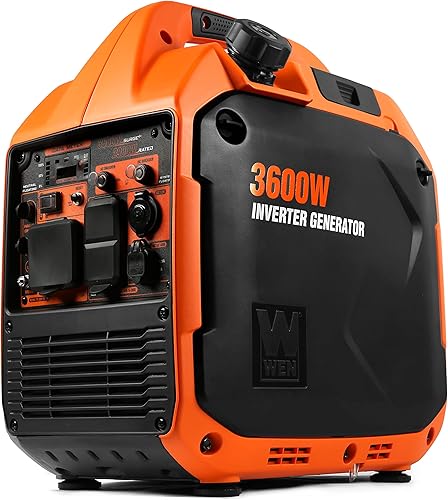 |  | 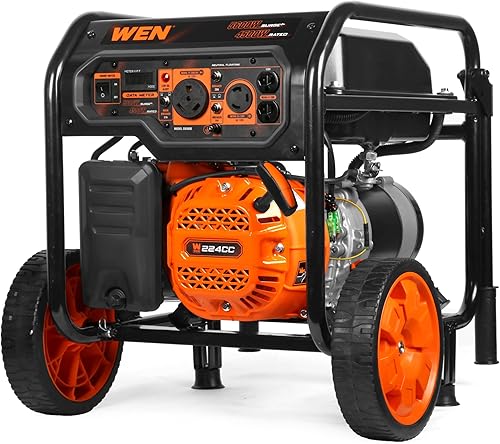 |  |
|---|---|---|---|---|---|---|---|---|---|---|
| Product | DuroMax XP13000EH | Westinghouse 14500 Tri-Fuel | Honda EU7000iS | Honda EU2200i | WEN 6800-Watt Dual Fuel | Jackery Explorer 1000 v2 | WEN 3600-Watt Inverter | Genkins 4500W Inverter | WEN 5600-Watt Generator | PowerSmart 3800 Watt Inverter |
| Brand | DuroMax | Westinghouse | Honda | Honda | WEN | Jackery | WEN | Genkins | WEN | PowerSmart |
| Best for | Best Overall | Best for Tri-Fuel | Best for Quiet Power | — | — | Best for Battery Power | Best for RV Trips | Best for Open Frames | Best for Long Runtimes | Best for Electronics |
| The listing says | 13,000 watts dual fuel power DuroMax engine | Compatible with WATS200 transfer switch 550cc engine with pressure lubrication | Inverter technology for sensitive electronics Operates at 52 to 58 dB(A) | Inverter technology for sensitive electronics Operates at 48 to 57 dB(A) | 224cc dual-fuel engine Bonded-neutral 240V configuration | 10ms UPS switchover 1,500W output and 1,024Wh capacity | 149cc engine with 3600 surge watts Clean power for sensitive electronics | 4500 peak/3700 rated watts 212 cc 4-stroke OHV engine | 5600 starting/4500 running watts Includes wheel and handle kit | 3800 starting/3200 running watts 120V 20A, 30A, and USB ports |
| More information | Check Latest Price on Amazon | Check Latest Price on Amazon | Check Latest Price on Amazon | Check Latest Price on Amazon | Check Latest Price on Amazon | Check Latest Price on Amazon | Check Latest Price on Amazon | Check Latest Price on Amazon | Check Latest Price on Amazon | Check Latest Price on Amazon |
1. DuroMax XP13000EH 13
Best for: Whole-home emergency backup power needs.
This generator is built for serious power, providing 13,000 watts to run your entire home during a storm. Its dual-fuel capability allows you to switch between gas and propane quickly using the front-facing interface. Unlike models with plastic parts, this unit uses a heavy-duty all-metal frame and panel to handle years of wear. It’s much larger and heavier than the Honda EU2200i, so it isn’t meant for portable camping trips.
The engine is designed for long-term durability, supported by 100% copper windings that conduct heat better than aluminum. This construction helps the generator last longer when used for heavy power demands. If you need to power a central air conditioner or a well pump, the transfer switch-ready 50-amp outlet provides the necessary connection. It isn’t the right choice if you need a quiet unit for small, sensitive electronics, as its primary focus is raw output.
If you prioritize portability over raw wattage, look for a digital inverter instead. Choose this model if your primary goal is keeping the lights, refrigerator, and heating systems running simultaneously during an extended outage. Its no-flat tires help move the heavy frame over rough ground, but the weight remains significant.
Pros
- Massive 13,000-watt power capacity
- Dual-fuel gas and propane operation
- Durable all-metal frame construction
Cons
- Not designed for quiet operation
- Heavy weight limits mobility
2. Westinghouse 14500 Peak Watt Tri-Fuel Home Backup Portable Generator
Best for: Homeowners needing multiple fuel source options.
This generator is unique because it runs on gasoline, propane, or natural gas. It features a powerful 550cc engine with a pressure lubrication system that keeps critical components running smoothly. You can pair it with an automatic transfer switch for seamless home backup. It’s a more complex setup than the WEN 3600-Watt Inverter, but it offers far greater flexibility for long-term fuel availability.
The unit provides clean power with less than 5% total harmonic distortion (THD), making it safe for your computers and TVs. It includes a CO sensor that shuts the engine down if it detects high levels of carbon monoxide. It isn’t intended for users who want a simple, “grab-and-go” portable power solution due to its size and setup requirements.
Pros
- Runs on three different fuel types
- Clean power for sensitive electronics
- Integrated carbon monoxide safety sensor
Cons
- Requires professional setup for home integration
- Large size is difficult to move
3. Honda EU7000iS 7000 120/240V Watt Inverter Generator (EU7000ISNAT1X)
Best for: Quiet operation with high power output.
This inverter generator delivers stable power while remaining remarkably quiet, operating between 52 and 58 dB(A). You can monitor and control the unit using the My Generator smartphone app via Bluetooth. It is quieter than the DuroMax XP13000EH, though it provides less total wattage for heavy-duty home appliances.
If you need to power a large home during an outage, check your total wattage requirements first. The EU7000iS is built for efficiency rather than raw maximum output. If your appliances exceed its capacity, you’ll trip the breaker.
The CO-MINDER system monitors carbon monoxide levels and shuts the machine off if they get too high. Its Eco Throttle system helps save fuel, allowing it to run for up to 16 hours on a single 5.1-gallon tank. You must choose the EU3200IAC2 instead to remain compliant with state regulations.
Pros
- Very quiet operation during use
- Smartphone app for remote monitoring
- Reliable inverter power for electronics
- 3-year residential warranty
Cons
- Not available in California
4. Honda EU2200i 2200 Watt Inverter Generator (EU2200ITAN)
Best for: Easy transport and light power tasks.
Weighing just over 47 pounds, this is an excellent choice for camping or powering small appliances like a refrigerator, hair dryer, or microwave. Like larger models, it uses inverter technology to provide clean, safe power suitable for sensitive electronics like computers. It operates at 48 to 57 dB(A), which is quieter than a normal conversation. This makes it perfect for shared campsites where you don’t want to disturb others.
The unit includes the CO-MINDER safety system to monitor carbon monoxide levels and automatically shut down the engine before levels become dangerously high. Its fuel efficiency is managed by the Eco Throttle system, which adjusts engine speed to meet the current load. You can expect a runtime between 3.2 and 8.1 hours on a single 0.95-gallon tank.
If you live in California, this specific model isn’t available. You should choose the EU1000T1AG or the EU3200IAC2 instead. This generator isn’t designed for whole-home backup, so it won’t run central AC or heavy-duty power tools. If you require remote monitoring, the My Generator app provides wireless stop and service reminders via Bluetooth. Every unit is backed by a 3-year residential warranty.
Pros
- Very lightweight and portable
- Extremely quiet during operation
- Clean power for sensitive electronics
Cons
- Limited power for large homes
- Small fuel tank limits runtime
5. WEN 6800-Watt Dual Fuel RV-Ready Electric Start Portable Inverter Generator
Best for: Electric vehicle owners needing backup.
This dual-fuel inverter handles both gasoline and propane. On gasoline, you get 6800 surge watts and 5100 rated watts. Propane delivers 6000 surge watts and 4500 rated watts. Its bonded-neutral 240V configuration provides the specific power required for Level 2 charging of electric and hybrid vehicles.
Use the fuel shut-off feature to drain the carburetor before every shutdown. This prevents old fuel from gumming up the engine, which is the most common cause of starting failure after storage. If you plan to store the unit for more than a month, always run the engine until it stalls to clear the lines.
The WEN Watchdog sensor monitors carbon monoxide levels and kills the engine if it detects a dangerous buildup. You can connect your gear via the L14-30R 120V/240V receptacle, two 120V outlets, a TT-30R RV plug, or the 12V DC and USB ports. Use the voltage selector switch to match your specific output needs.
This model isn’t the right choice if you require maximum whole-home power, as it’s built for portability and versatility. While it includes wheels and a telescoping handle, the 224cc engine adds significant weight compared to compact camping inverters.
Pros
- Supports Level 2 EV charging
- Dual-fuel flexibility
- Built-in carbon monoxide shutdown sensor
Cons
- Heavier than smaller inverter models
- Requires separate propane tank for dual fuel
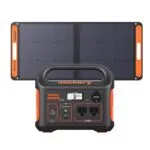
6. Jackery Explorer 1000 v2 Portable Power Station
Best for: Portable, silent battery power.
This is a portable power station, not a traditional gas generator. It uses a 1,024Wh LFP battery that can power multiple devices at once, including AC units, fridges, and electric pots. It features an ultra-fast 10ms UPS switchover to keep your gear running if the power cuts out. Unlike gas-powered picks, it’s completely silent and produces zero emissions, but it has a much shorter total runtime.
It charges from 0% to 100% in just 50 minutes when using the emergency charging mode in the app. If you prioritize battery longevity over speed, use the default 1.25-hour charging mode to optimize health. The battery is rated for a 10-year lifespan, maintaining over 70% of its original capacity after 4,000 cycles.
It isn’t for users who need days of continuous power, as it relies on recharging rather than a fuel tank. If you need to power high-draw items, remember that the unit offers a 1,500W AC output and a 3,000W surge peak. Use the Jackery App to toggle between the 50-minute emergency mode and the 30 dB quiet overnight mode depending on your immediate environment.
Pros
- Silent, emission-free power
- Fast 50-minute recharge time
- Long-lasting LFP battery technology
Cons
- Needs frequent recharging
- Not suitable for high-wattage, long-term use
7. WEN 3600-Watt Portable Inverter Generator
Best for: Quiet camping and RV trips.
This inverter generator weighs only 46 pounds, making it significantly more portable than heavy-duty alternatives. Its 149cc engine produces 2900 rated watts of clean power, which protects sensitive electronics like tablets and laptops from voltage spikes.
Always use the fuel shut-off feature before storing the unit. This drains the remaining fuel from the carburetor, preventing clogs that often lead to engine repairs. If you notice the engine struggling to start after a period of inactivity, you likely skipped this step.
The panel includes two 120V receptacles, one TT-30R RV plug, one 12V DC outlet, and two 5V USB ports. This variety allows you to charge mobile devices while simultaneously powering RV appliances. If your total load exceeds 2900 watts, the generator will fail to sustain power; check the wattage requirements of your specific devices before plugging them in.
While this unit is perfect for campsites, it lacks the capacity for whole-home backup. Don’t attempt to run high-draw machinery or multiple large appliances at once.
Pros
- Very quiet and lightweight
- Clean power for safe electronics use
- Fuel shut-off protects the engine
Cons
- Lower total power output
- Not for large home backup
8. Genkins 4500W Inverter Generator
Best for: Reliable RV power.
The Genkins 4500W Inverter provides 4,500 peak watts and 3,700 rated watts, which is plenty for most RV needs. Its open-frame design helps with cooling, which can extend the engine’s service life. It provides stable, pure-sine-wave power, making it safe for your sensitive electronics. It’s more compact than the DuroMax XP13000EH but offers more power than the smaller WEN 3600-Watt Inverter.
If your appliance draws more than 30 amps, this unit won’t support it. Always check your device’s starting wattage to ensure it falls within the 4,500-watt peak limit. The 2.11-gallon tank provides up to 8 hours of runtime at half-load, which is helpful for uninterrupted camping power.
Users often mistake this for a dual-fuel model; note that it runs exclusively on gasoline. If you require propane or natural gas compatibility, look elsewhere. The unit includes a 120V NEMA L5-30R outlet for RVs and a standard 120V NEMA 5-20R household outlet. It features low-oil auto-shutdown and overload protection to prevent engine damage during operation. At 70 dB measured from 7 meters, it’s quieter than traditional generators but louder than fully enclosed inverter models.
Pros
- Good power-to-weight ratio
- Clean power for sensitive devices
- Open-frame design for better cooling
Cons
- Gasoline only; no dual-fuel option
- Louder than some enclosed inverters
9. WEN 5600-Watt Portable Generator
Best for: Standard home backup.
This is a classic standard generator that provides 5,600 starting watts and 4,500 running watts. It comes with a wheel and handle kit, which makes it much easier to move around your property. It’s ready for a transfer switch, making it a straightforward choice for home power outages. Compared to the Jackery Explorer 1000 v2, it offers much longer runtime but requires gasoline and maintenance.
The control panel includes various outlets, including an RV-ready plug and a twist-lock receptacle. It’s a reliable, no-frills machine built for basic backup needs. It isn’t designed for quiet operation or for powering sensitive electronics without a proper power conditioner.
If you need to power a home during an outage, use the 120V 30-amp NEMA L5-30R twist lock receptacle to connect directly to a transfer switch. If you’re camping, the RV-ready 120V 30-amp TT-30R outlet handles your vehicle’s power needs.
The 4.3-gallon gas tank provides up to 12.5 hours of run time at a half-load. If you run the unit at full capacity, expect significantly shorter intervals between refueling. Always prioritize the multi-year limited warranty by keeping up with the maintenance of the 224cc engine.
Pros
- Simple, reliable design for backup
- Includes wheels and handle for transport
- Ready for transfer switch connection
Cons
- No inverter technology for sensitive gear
- Requires gasoline and regular maintenance
10. PowerSmart 3800 Watt Portable Inverter Generator
Best for: Simple, safe power for electronics.
This inverter generator delivers 3,800 starting watts and 3,200 running watts. It’s designed to be quiet, operating at 59 dBA from 23 feet away, which is great for outdoor use. It’s lightweight at 47 pounds and features a handle for easy transport. It’s much easier to manage than the heavy Westinghouse 14500 Tri-Fuel, though it provides less overall power.
The panel features a variety of ports, including USB and DC outlets, and an Eco Mode for better fuel efficiency. It’s a solid choice for campers who need clean power for laptops and phones. It isn’t meant for home backup where you have high-draw appliances running simultaneously.
Pros
- Quiet operation for outdoor use
- Lightweight and easy to move
- Safe for sensitive electronics
Cons
- Lower total power output
- Gasoline only
How to Choose in Sixty Seconds
Fuel Type and Availability
Decide if you want a gas-only model or a dual-fuel unit that runs on propane. Propane is often easier to store for long periods without the fuel going bad, which is a huge benefit for emergency backup. If you live in an area where natural gas is piped to your home, a tri-fuel model might be the most convenient for long-term outages. Confirm your storage space for fuel before ordering. Always check the Environmental Protection Agency guidelines regarding safe operation and emissions to ensure you’re meeting local requirements for your specific setup.
Power Output Needs
Calculate the total wattage of the devices you need to run at the same time. A small inverter generator is enough for a fridge and some lights, but you’ll need a large 10,000+ watt model to run major appliances like an AC unit or well pump. Don’t just look at peak watts; pay attention to the rated running watts. If you only need to charge phones and run a laptop, a portable power station is often much simpler and quieter than a gas engine.
Inverter vs. Standard
Inverter generators provide clean power, which is essential for modern electronics like computers and smart TVs. Standard generators offer more raw power, but they can produce electricity that might damage sensitive items. If you are camping or powering modern home tech, choose an inverter model.
Frequently Asked Questions
Can I run a generator inside my garage?
Never run a generator inside a home or any partially enclosed area. Generators produce carbon monoxide, a colorless, odorless gas that can be fatal within minutes. Always place your generator at least 20 feet away from your home with the exhaust pointing away from all windows, doors, and vents.
What is the difference between starting and running watts?
Starting watts provide the extra power needed for a few seconds to start motors, while running watts represent the power provided continuously. You must ensure your generator can handle the starting wattage of your largest appliance alongside your total continuous load requirements.
Do I need a transfer switch for home backup?
A transfer switch is a device that safely connects your generator to your home’s electrical panel. It prevents back-feeding, which is when power travels from your generator back into the utility lines, posing a serious risk to utility workers.
How often should I perform maintenance?
You should also check the air filter and spark plug regularly. Models with fuel shut-off features, like this high-output inverter, make maintenance easier by allowing you to drain the carburetor, which prevents old fuel from clogging the engine. Keeping up with these simple tasks ensures your generator will be ready to work when you actually need it during an emergency.
Closing
Selecting the right generator depends on whether you prioritize raw power or portability. For total home coverage, the DuroMax XP13000EH remains the top choice due to its high output and fuel versatility.
If you prefer a more portable and quiet solution for camping or light backup, the Honda EU2200i is the best pick for its ease of use. Once you have identified your primary power needs, check the outlet types on your chosen model to ensure they match your existing home or RV connections.
Mistakenly choosing an inverter for heavy-duty, whole-home needs often leads to insufficient power during outages. Conversely, selecting a massive frame generator for camping creates unnecessary noise and transport burdens. If you need clean power for sensitive electronics, always verify the THD rating is below 5%. If you plan to use a transfer switch, ensure the model features a 50A or 30A twist-lock outlet.