Choosing a drone for vertical shooting means balancing the ability to rotate the camera with your need for portability and flight time. While most models here offer vertical options, the difference lies in sensor size for low-light performance and the complexity of the tracking features.
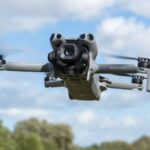
Best overall: DJI Mini 3, which offers true vertical shooting and a 3-axis gimbal for stable 4K video, making it a reliable choice for creators who need high-quality, shareable vertical content.
Best for professional imaging: DJI Mini 5 Pro, featuring a 1-inch CMOS sensor and omnidirectional obstacle sensing, which provides the high-end image quality and safety features required for serious professional aerial work.
Best for simplicity: DJI Neo, which allows for controller-free operation and easy palm takeoff, perfect for users who want to capture quick, vertical vlogs without managing complex flight setups.
This guide is for anyone looking to upgrade their social media content with professional-looking vertical aerial footage.
How We Picked
To earn a spot, each drone had to clearly state its ability to perform vertical shooting and provide specific technical details regarding flight time, sensor type, and obstacle avoidance systems. We excluded models that lacked clear specifications or failed to provide sufficient information on their imaging capabilities. Our selections focus on models that prioritize ease of use for content creators while maintaining the stability needed for crisp, professional-looking aerial shots.
All 10 products side by side — scroll sideways to see every column.
| Top Pick | Best for Professionals | Best for Travelers | Best for Long Range | Best for Cinematography | Best for Palm Takeoff | Best for Inspections | Best for Beginners | |||
| Preview |  |  |  |  |  |  |  |  |  |  |
|---|---|---|---|---|---|---|---|---|---|---|
| Product | DJI Mini 3 | DJI Mini 5 Pro | DJI Air 3S | Potensic ATOM 4K | HOVERAir X1 | SKYROVER X1 | DJI Mavic 4 Pro | DJI Neo | Bwine F7GIM | DJI Mini 4K |
| Brand | DJI | DJI | DJI | Potensic | HOVERAir | SKYROVER | DJI | DJI | Bwine | DJI |
| Best for | Best Overall | Best for Professionals | Best for Travelers | Best for Long Range | — | — | Best for Cinematography | Best for Palm Takeoff | Best for Inspections | Best for Beginners |
| The listing says | Under 249 g, no FAA registration required 4K HDR video with dual native ISO | Foldable design with 42GB internal storage 1-inch CMOS sensor with 4K/60fps HDR | 1" CMOS primary camera for low-light 4K/60fps HDR video with 14 stops range | 6 KM transmission range with PixSync 3.0 | Follows at speeds up to 15 mph Wind resistance up to level 4 | 4K/60fps HDR video and 48 MP photos Under 249g weight | 100MP Hasselblad camera with 6K/60fps HDR Dual tele cameras for zoom shots | Requires DJI Fly app from website 135g weight, no FAA registration required | 6K photos and 4K 30fps video GPS, TOF sensors, and beginner mode | Under 249 g, no FAA registration required 4K resolution with 3-axis gimbal |
| More information | Check Price on Amazon | Check Price on Amazon | Check Price on Amazon | Check Price on Amazon | Check Price on Amazon | Check Price on Amazon | Check Price on Amazon | Check Price on Amazon | Check Price on Amazon | Check Price on Amazon |
1. DJI Mini 3
Best for: Beginners needing stable vertical social media footage.
The DJI Mini 3 stands out for its straightforward approach to vertical content. By rotating the camera gimbal, it captures tall, full-frame video perfect for platforms like Instagram and TikTok. While it lacks the advanced obstacle sensing of the DJI Air 3S, its lightweight design keeps it below the 249g threshold that requires FAA registration for recreational flyers.
Always check the FAA website to confirm your specific flight status, as commercial use or certain flight conditions may still trigger registration requirements. If you fly for recreational purposes, you can avoid the registration and Remote ID process by keeping the aircraft under this weight limit.
This drone is a solid choice for those who prioritize flight time and ease of use over complex automated flight paths. Its 3-axis mechanical gimbal ensures that even in Level 5 winds, your footage remains steady. This stability is a major advantage over smaller, less capable drones. If you need to fly at higher elevations, the brushless motors allow for takeoff at altitudes up to 4,000 meters.
You can extend the standard 38-minute flight time to 51 minutes using the Intelligent Flight Battery Plus. Be aware that choosing this battery pushes the aircraft weight above 249g, meaning you must register the drone. If you prioritize staying under the weight limit, stick to the standard battery.
It isn’t for users who need professional-level obstacle avoidance or multi-camera setups for complex cinematic production. Use the QuickShots feature to automate dynamic flight patterns if you’re new to piloting.
Pros
- True vertical shooting mode
- Under 249g weight (with standard battery)
- 3-axis mechanical gimbal
- Up to 38 minutes flight time
- 4K HDR video with Dual Native ISO
Cons
- Lacks obstacle avoidance sensors
- Heavier battery requires registration
- No internal storage
2. DJI Mini 5 Pro Fly More Combo With DJI RC
Best for: Professionals requiring high-quality imaging and safety.
The DJI Mini 5 Pro is built for those who need high-end results in a compact frame. The 1-inch CMOS sensor captures significant detail, which is helpful when shooting in challenging lighting conditions. Its ability to perform 225° gimbal rotation allows for creative angles that go beyond standard vertical shots, giving you more flexibility when scouting locations.
This model is a step up from the DJI Mini 3 in terms of safety, thanks to its omnidirectional obstacle sensing. It’s designed for creators who need to fly in tighter spaces or at night and want the assurance that sensors provide. The forward-facing LiDAR and vision sensors specifically enhance safety for night flights and return-to-home maneuvers.
If you’re a cyclist or someone filming fast-moving subjects, use the upgraded ActiveTrack 360°. It offers customizable modes that provide faster response times than previous iterations. If you fly for long sessions, note that the Intelligent Flight Battery provides 36 minutes of flight time. You can power up three batteries in 115 minutes using the included charging hub.
A common mistake is assuming the drone works immediately out of the box with standard app stores. Because the DJI Fly app isn’t on Google Play, you must download it directly from the official DJI website. Failing to do this before heading to a remote location will prevent you from flying.
The 42GB of internal storage is a critical safety net. If you forget your SD card, you can still capture footage without interruption. Use this space for essential shots when your primary storage fails.
Pros
- Large 1-inch CMOS sensor
- Omnidirectional obstacle sensing
- 42GB internal storage
- 4K/60fps HDR video
- 225° flexible gimbal
Cons
- Requires external app download
- Complex for total beginners
3. DJI Air 3S Fly More Combo
Best for: Travelers wanting advanced features and safety.
The DJI Air 3S is designed for those who refuse to compromise on image quality. Its 1-inch CMOS primary camera excels in low-light scenarios, pulling detail from sunsets and nightscapes that smaller sensors often lose. You gain 14 stops of dynamic range, which preserves intricate cloud textures that would otherwise wash out in high-contrast lighting.
The drone introduces forward-facing LiDAR for nightscape omnidirectional obstacle sensing. If you fly near buildings after dark, this sensor suite allows the aircraft to navigate around structures automatically. This safety net is missing from the Mini series, making the Air 3S the clear choice for complex urban environments.
When signal strength drops, the upgraded return-to-home algorithms intelligently select the optimal flight path back to your location. This ensures you can scout remote areas with confidence, supported by a 45-minute flight time and a 20km transmission range.
If you shoot wide-angle vistas, use the Free Panorama mode to stitch seamless images. For tighter, high-detail shots with minimal distortion, switch to the medium telephoto lens.
Choose this model if your workflow demands cinematic 4K/60fps HDR video and reliable night-flight safety. If you only need casual snapshots at the park, the size and technical complexity may be more than you require.
Pros
- Dual-camera system
- 14 stops dynamic range
- Nightscape obstacle sensing
- 20km transmission range
- 45-minute flight time
Cons
- Battery charger sold separately
- Larger than Mini series
4. Potensic ATOM 4K GPS Drone
Best for: Users seeking long flight time and value.
The Potensic ATOM 4K offers a great balance of features with its mechanical stabilization system and long flight time across three batteries. Its PixSync 3.0 technology provides a reliable connection, which is helpful when you’re flying in environments with potential interference. The ability to use QuickShots makes it simple for anyone to get cinematic moves without needing advanced piloting skills.
This drone is a practical choice for outdoor enthusiasts who want to spend more time in the air. Compared to the DJI Neo, the ATOM provides a more traditional flying experience with a dedicated remote, though it lacks the ultra-compact, controller-free convenience of the DJI model. It isn’t for users who need top-tier, professional-grade low-light sensors.
Pros
- 96-minute total flight time
- 3-axis brushless gimbal
- 6km transmission range
- Lightweight design
- QuickShot flight modes
Cons
- No obstacle avoidance
- 4K limited to 30fps
5. HOVERAir X1 Drone with Camera
Best for: Vloggers needing a hands-free cameraman.
The HOVERAir X1 is unique because it’s designed specifically for self-flying. It doesn’t rely on a traditional controller, instead using pre-programmed flight paths to follow you automatically. This makes it an excellent tool for cyclists, skaters, or hikers who want to capture their activity without stopping to pilot a drone.
Its fully enclosed design is a big safety plus, allowing for close-range shots that would be risky with other drones. However, because it’s focused on tracking and portability, it isn’t for those who want to perform manual, long-distance aerial photography or complex cinematics.
Pros
- Fully enclosed safety guards
- Hands-free tracking modes
- 32GB internal storage
- Very portable design
- Simple app interface
Cons
- Limited flight altitude
- 2.7K max video resolution
6. SKYROVER X1 Drone with Camera Combo
Best for: Outdoor adventurers needing obstacle avoidance.
The SKYROVER X1 is a strong contender for those who prioritize safety and creative freedom. Its 360-degree obstacle avoidance is a standout feature, helping you navigate trails or forests with more confidence. The AI Night Mode is also useful for capturing evening landscapes, which can be a weak point for many smaller drones.
If you’re flying in open fields, prioritize the 9.32-mile transmission range to maintain a stable 1080p/60fps live view. When navigating tight spaces like scenic trails or forests, rely on the 360-degree sensors to prevent collisions. If the drone loses signal, the Smart Return to Home feature triggers automatically to bring it back safely.
Avoid the mistake of flying in high winds if you aren’t comfortable with manual adjustments, as the drone’s weight under 249g makes it portable but susceptible to gusts. Always rotate your camera for vertical shooting if you intend to post directly to social media, as this saves time in post-production.
This drone feels designed for someone who wants a bit of everything: long range, safety sensors, and decent image quality. It isn’t for those who prefer the most established software ecosystem or the smallest possible form factor.
Pros
- 360° obstacle avoidance
- 4K/60fps HDR video
- 9.32-mile transmission range
- AI night shooting mode
- 96-minute total flight time
Cons
- Heavier than ultra-light models
- Requires learning AI modes
7. DJI Mavic 4 Pro Drone With DJI RC 2
Best for: Professional cinematographers.
The DJI Mavic 4 Pro is the most capable option for those who treat aerial photography as a serious profession. Its 100MP Hasselblad camera and triple-camera system offer greater versatility than the Mini or Air series, allowing you to switch between wide, medium, and telephoto shots effortlessly. The 360-degree obstacle sensing ensures that your gear is protected during complex shots.
If you’re filming in low-light conditions, rely on the 0.1-Lux Nightscape Omnidirectional Obstacle Sensing to navigate safely. For long-form projects, the 51-minute flight time allows you to capture extensive scenes without frequent battery swaps. Use the 30km O4+ transmission system when you need to maintain a smooth 10-bit HDR feed from a significant distance.
This is a professional-grade tool, reflected in the high-quality, 7-inch rotatable RC Pro 2 controller and the sheer detail of its imaging. It isn’t intended for the casual user or the beginner who is still learning the basics of flight and drone regulation. If you prioritize portability over raw sensor power, the complexity of this system may become a burden rather than an asset.
Pros
- 100MP Hasselblad camera
- Triple-camera system
- 51-minute flight time
- 30km transmission range
- Nightscape sensing
Cons
- High learning curve
- Large, heavy footprint
8. DJI Neo
Best for: Minimalists and social media creators.
The DJI Neo is all about convenience. It’s incredibly light and can take off directly from your palm, making it perfect for quick social media updates or family gatherings. The built-in propeller guards make it one of the safest drones to fly indoors or near people, which is a major benefit for nervous flyers.
At just 135g, this drone is often lighter than the smartphone in your pocket. Because it falls under the weight threshold, you don’t need to worry about FAA registration or Remote ID requirements. If you’re heading to a family BBQ or a local park, simply grab it and go.
While it lacks the range and professional sensor size of the Mavic or Air series, it’s unrivaled for its “grab and go” nature. It isn’t for those who need to film long-distance landscapes or require high-end manual controls for cinematic, professional-grade production.
Before your first flight, remember that the DJI Fly app isn’t on Google Play. You must download it directly from the DJI website to activate the unit. If you skip this step, the drone won’t function.
Pros
- 135g ultra-lightweight
- Palm takeoff and landing
- Built-in propeller guards
- Controller-free operation
- 4K stabilized video
Cons
- Short flight time
- Limited manual range
- Requires manual app download
9. Bwine F7GIM 4K Video 6K Photo Drones with Camera
Best for: Inspections and landscape enthusiasts.
The Bwine F7GIM is built for stability and ease of use, with a mechanical stabilization system that keeps footage smooth even in high-speed flight. The inclusion of a 6K camera for photos and 4K for video gives you plenty of resolution to work with. It’s a solid choice for those who need a reliable workhorse for inspections or outdoor photography.
This drone is very beginner-friendly, with one-key takeoff and return features that take the stress out of flying. It isn’t for the user who wants the smallest, most portable drone on the market, as it carries a more traditional, rugged aesthetic.
Pros
- 6K photo / 4K video
- 3-axis gimbal
- 70-minute total flight time
- Beginner-friendly sensors
- Includes storage case
Cons
- Wired transmission only
- Larger design
10. DJI Mini 4K
Best for: Beginners.
The DJI Mini 4K provides a solid entry point into the world of drone photography. It delivers the core DJI experience—reliable flight, good stabilization, and decent image quality—without the added complexity of advanced models. It’s a great way to learn the ropes of vertical shooting and aerial composition.
Because the drone weighs under 249 grams, you avoid FAA registration and Remote ID requirements for recreational use. If you plan to fly commercially, check the FAA website, as those rules differ.
This device handles Level 5 winds and altitudes up to 4,000 meters thanks to its brushless motors. If you’re flying in gusty conditions, trust the mechanical stabilization system to keep your 4K footage steady. Beginners should rely on the GPS Return to Home and one-tap takeoff features to avoid crashes.
If you’re a novice, download the DJI Fly app directly from the official DJI website, as it’s no longer on Google Play. Choose between the one, two, or three-battery sets to get up to 93 minutes of flight time. It isn’t for those who need advanced obstacle-avoidance sensors.
Pros
- Under 249g
- 3-axis gimbal
- 4K resolution
- Beginner-friendly features
- Reliable flight performance
Cons
- No obstacle avoidance
- Basic feature set
How to Choose in Sixty Seconds
Prioritize Safety Features
If you’re new to flying, look for drones with obstacle avoidance and propeller guards. These features protect your investment and the environment while you learn. Drones like the DJI Neo or HOVERAir X1 offer fully enclosed designs or guards, which reduce the stress of close-range filming. If you intend to fly near trees or buildings, never skip these features; they prevent accidents that are difficult to repair.
If you fly for recreation, drones under 249g like the DJI Mini series or Potensic ATOM don’t require FAA registration or Remote ID. However, if you choose a heavier model, you must check the FAA’s official website for registration requirements. Always prioritize models with GPS Auto Return or Smart Return-to-Home. If you lose signal or GPS is weak, these functions ensure the aircraft returns to its takeoff point automatically.
Match Camera Drones for Vertical Shooting
Are you filming for social media or professional projects? For quick vlogs, a drone like the HOVERAir X1 or DJI Neo is sufficient and easy to use. If you’re doing professional work, you need a larger sensor, such as the high-performance CMOS found in the DJI Mini 5 Pro or DJI Air 3S. A larger sensor captures more detail in low light, which is crucial for sunset or sunrise footage.
If your goal is strictly vertical social media content, ensure the drone specifically lists “True Vertical Shooting.” This allows for full-resolution sensor usage rather than cropping a wide image. For high-end cinematography, look for 4K/60fps HDR video and 3-axis gimbal stabilization. If you frequently shoot at night, prioritize models with AI Night Mode or LiDAR-based obstacle sensing, as these allow for safer and clearer footage in dim conditions.
Consider Portability vs. Performance
The best drone is the one you actually take with you. If you’re hiking or biking, weight and size matter. The DJI Mini series and the DJI Neo are excellent for travel because they fold down or fit in a pocket. However, these smaller drones often sacrifice advanced obstacle sensing or long-range transmission compared to larger models like the DJI Mavic 4 Pro.
If your priority is cinematic quality and maximum range, the extra weight of a professional model is a fair trade-off. If you want simplicity and speed, stick to the lighter, more compact options. Always factor in your total flight time needs. If you plan to spend all day in the field, choose kits that include a charging hub and multiple batteries, such as the 96-minute flight time options provided by the Potensic ATOM or SKYROVER X1.
Closing
The DJI Mini 3 remains our top pick for most users due to its perfect balance of portability, true vertical shooting, and stable 4K imaging. For those who need a more professional edge, the DJI Mini 5 Pro provides superior sensor performance and obstacle sensing that justifies the extra complexity.
Before you make your final choice, consider where you plan to fly most often. If you prioritize safety in complex environments, choose a model with omnidirectional obstacle sensing, such as the DJI Mini 5 Pro or Air 3S. If you’re a beginner looking for simplicity and regulation-friendly flying, models under 249g like the DJI Mini 4K or DJI Neo allow you to skip FAA registration for recreational use.
Once you have selected your model, check the manufacturer’s official website for the latest firmware and app versions, as some apps are no longer available on standard app stores. We recommend practicing basic flight maneuvers in a wide-open field to build muscle memory before attempting challenging shots. Always verify your local airspace and registration requirements on the FAA website to ensure you’re flying legally.