Choosing the right drone involves balancing your need for safety sensors against the size, portability, and camera quality you require for your footage. The key difference between these models is how they process environmental data, ranging from basic four-way collision prevention to advanced omnidirectional systems that use LiDAR to map surroundings in real time.
Best overall: DJI Air 3S, which offers advanced LiDAR-based omnidirectional sensing that excels even in low-light conditions, ensuring you can fly near structures with confidence during sunset or night shoots.
Most advanced sensing: Autel Robotics EVO 2, featuring a robust system of 12 vision sensors and sonar to provide comprehensive 360-degree obstacle avoidance for those working in complex environments.
Best compact design: DJI Mini 5 Pro, which packs high-end omnidirectional safety sensors into a lightweight, travel-friendly frame that’s easy to transport while maintaining professional-level image quality.
The rest of this guide is for pilots who want to prioritize safety and flight reliability above all else.
How We Picked
To select these drones, we compared 48 different product listings available on Amazon. We prioritized models that clearly defined their sensing technology, such as LiDAR or multi-directional vision sensors, rather than those offering only basic proximity alerts. Each pick had to provide clear, manufacturer-stated specifications regarding flight time, camera resolution, and transmission range. We excluded models that lacked verifiable information on their collision avoidance capabilities or failed to provide sufficient detail on their included components.
All 10 products side by side — scroll sideways to see every column.
| Top Pick | Runner-Up | Best for Content Creators | Best for Screen Pilots | Best for Cinematographers | Best for AI Flight | Best for Long Flight | Best for Beginners | Best for First-Time Pilots | ||
| Preview |  |  |  |  |  | 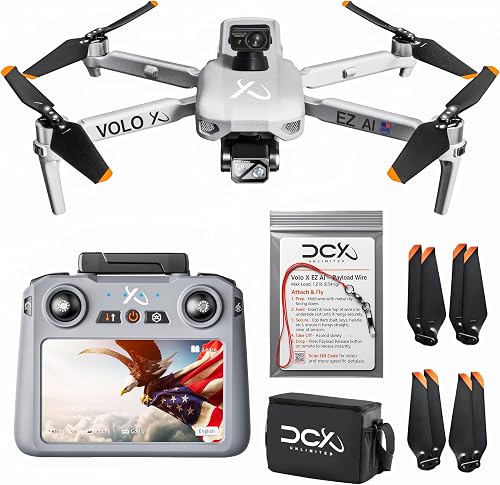 |  |  |  |  |
|---|---|---|---|---|---|---|---|---|---|---|
| Product | DJI Air 3S | DJI Air 2S | DJI Mini 5 Pro | SKYROVER X1 | Autel Robotics EVO 2 | DCX Volo X | V168 Pro Max | GPS Obstacle Avoidance Drone | Foldable Quadcopter Drone | 4K Obstacle Avoidance Drone |
| Brand | DJI | DJI | DJI | SKYROVER | Autel | DCX UNLIMITED | SuperRC | Zoiskn | xobuo | TODAMU |
| Best for | Best Overall | Runner-Up | Best for Content Creators | Best for Screen Pilots | Best for Cinematographers | Best for AI Flight | — | Best for Long Flight | Best for Beginners | Best for First-Time Pilots |
| The listing says | 1" CMOS sensor for low-light shots 4K/60fps HDR video with 14 stops range | 1-inch sensor records 5.4K/30fps video MasterShots intelligent flight feature | Includes full USA warranty Ultra-portable design for creators | 4K/60fps HDR video and 48MP photos 5.5" HD touchscreen remote with 700-nit | 20 megapixel 1-inch CMOS sensor 12-bit A-Log records 68.6 billion colors | AI-assisted follow and return-to-home 360° obstacle detection with LiDAR | Brushless motor with built-in screen remote 4-directional obstacle avoidance system | Weighs less than 249g 360° obstacle avoidance and GPS | Foldable design with smart flight modes 720P HD camera with 90° adjustable angle | 4-way obstacle avoidance sensors 4K camera with 148° tilt lens |
| More information | Check Latest Price on Amazon | Check Latest Price on Amazon | Check Latest Price on Amazon | Check Latest Price on Amazon | Check Latest Price on Amazon | Check Latest Price on Amazon | Check Latest Price on Amazon | Check Latest Price on Amazon | Check Latest Price on Amazon | Check Latest Price on Amazon |
1. DJI Air 3S Fly More Combo
Best for: Travelers who need reliable performance in low-light conditions.
The DJI Air 3S stands out for its forward-facing LiDAR, which allows the drone to identify obstacles even when the sun goes down. This makes it a significant step up from the DJI Air 2S, which relies on standard vision sensors that may struggle more in dark environments. You get a 1-inch CMOS sensor that captures high-quality 4K HDR footage, perfect for those who prioritize image detail alongside safety.
This drone isn’t for the hobbyist who needs a sub-249g weight class, as its feature-rich design and battery system prioritize stability and flight time over ultra-lightweight portability. The inclusion of three batteries and a dedicated charging hub makes it a complete package for long days in the field.
Pros
- LiDAR sensing for better night flight.
- High-quality 1-inch CMOS camera sensor.
- Long 45-minute maximum flight time.
Cons
- Charger sold separately from the bundle.
- Heavier than ultra-lightweight drone models.
2. DJI Air 2S Fly More Combo with Smart Controller
Best for: Pilots needing reliable, multi-directional environment awareness.
The DJI Air 2S uses a four-direction sensing system to perceive its environment, which is excellent for avoiding collisions in complex, open spaces. While it lacks the LiDAR found in newer models, it remains a capable performer for those who want a proven, stable flight experience. The 1-inch sensor captures 5.4K video, ensuring your footage remains sharp and color-accurate for professional needs.
If you’re flying in tight, cluttered areas, prioritize the forward and backward sensors to prevent high-speed impacts. If you’re operating in open landscapes, rely on the O3 transmission to maintain a clear feed up to 7.5 miles away. Many beginners mistake this for a fully autonomous drone; however, it still requires manual input to navigate around obstacles not covered by the four-way sensor array.
Compared to the SKYROVER X1, this model focuses more on established O3 transmission reliability rather than high-end AI tracking features. It isn’t for the pilot who requires omnidirectional coverage, as the top and bottom sensors are more limited compared to the latest pro-series drones.
Pros
- Four-direction obstacle sensing system.
- High-resolution 5.4K video recording.
- Advanced O3 image transmission technology.
Cons
- Lacks full 360-degree omnidirectional sensing.
- No LiDAR for low-light depth mapping.
3. DJI Mini 5 Pro Drone Fly More Combo with RC
Best for: Content creators needing a portable, safety-focused drone.
The DJI Mini 5 Pro manages to fit omnidirectional obstacle sensing into a frame weighing under 249 grams. This is a massive advantage for travel, as it provides professional-level safety without the bulk of larger aircraft. The DJI Mini 5 Pro features a large-format CMOS sensor and 4K/60fps HDR video.
Unlike the Autel Robotics EVO 2, this drone is built specifically for users who need to comply with weight-based drone regulations while still having access to advanced tracking and safety features. It isn’t for the pilot looking for a large-format cinema camera, as the compact design prioritizes portability over the heavy-duty optics found in larger professional rigs.
Pros
- Under 249g for easier regulatory compliance.
- Omnidirectional sensing with LiDAR technology.
- Professional 1-inch CMOS image sensor.
Cons
- Small size can be affected by wind.
- Pro-level features require more setup time.
4. SKYROVER X1 Drone with Camera Combo with Screen Controller
Best for: Pilots wanting a complete kit with a built-in screen.
The SKYROVER X1 offers a full 360-degree obstacle avoidance system, which provides a high level of security when exploring new trails or parks. The remote controller features a 5.5-inch HD touchscreen with 700-nit brightness, meaning you don’t need to rely on your phone to see your live feed. This makes it a very convenient choice for those who want to jump into the air quickly.
When compared to the DJI Air 3S, the SKYROVER X1 offers a more integrated, all-in-one experience for the controller setup. It isn’t for the professional filmmaker who needs the absolute highest bit-depth for color grading, as the sensor specifications are more tuned for social media and travel photography. If you’re flying in direct sunlight, the 60Hz display ensures you can still frame your shots clearly.
If you prioritize portability, the under 249g weight is a major advantage for travel. However, if you’re flying in complex environments, rely on the omnidirectional sensing to prevent crashes. Beginners should practice these smart modes in open fields before moving to narrow trails.
Pros
- Full 360-degree obstacle avoidance.
- Built-in 5.5-inch HD touchscreen controller.
- Impressive 96-minute total flight time bundle.
Cons
- Sensor size smaller than premium alternatives.
- AI features may require a learning curve.
5. Autel Robotics EVO 2 Pro V3 w/Son-y 1″ CMOS Sensor
Best for: Cinematographers who need professional-grade imaging and safety.
The Autel Robotics EVO 2 is a powerhouse, featuring 12 computer vision sensors and sonar to create a true 360-degree obstacle avoidance field. This is the most sophisticated safety suite on the list, designed for pilots who can’t afford a collision in high-stakes environments. The 6K camera with an adjustable aperture gives you total control over your exposure, which is a major advantage for mapping or serious aerial cinematography.
Unlike the DJI Mini 5 Pro, this drone is a substantial piece of equipment designed for performance rather than portability. It isn’t for the casual beginner, as the advanced manual camera controls and large size are intended for experienced users who understand professional imaging workflows.
Pros
- 360-degree omnidirectional obstacle avoidance.
- High-resolution 6K HDR video recording.
- Adjustable aperture for professional light control.
Cons
- Large, heavy design is less portable.
- Steeper learning curve for new pilots.
6. DCX Volo X EZ AI Drone
Best for: Beginners who want AI-assisted flight features.
The DCX Volo X uses LiDAR sensors to provide all-around obstacle detection, which helps pilots navigate tight spaces. It includes a 4K camera with a 3-axis gimbal, ensuring your footage stays smooth even during movement. The DCX Volo X features an upgraded 11.4V 6000mAh battery.
Before your first flight, you must remove the foam padding from under the camera. Leaving this in place restricts gimbal movement and will cause permanent damage. If you notice the camera struggling to stabilize, check this padding immediately.
Compared to the TODAMU 4K Obstacle Avoidance Drone, this model offers a much more robust battery life and a dedicated screen controller. It isn’t for the professional pilot who needs high-end color profiles like D-Log, as this drone focuses more on ease of use and automated flight assistance. Because it lacks geofencing or height limits, pilots must remain responsible for their own flight path and local regulations.
Pros
- LiDAR-powered 360-degree obstacle detection.
- Long 47-minute single-battery flight time.
- Dedicated screen remote for easy viewing.
Cons
- Lacks advanced professional video color profiles.
- Larger footprint than ultra-compact foldable drones.
7. FPV Drone with 4K UHD Camera
Best for: Recreational pilots who want a stable, easy-to-fly experience.
The V168 Pro Max provides a four-directional obstacle avoidance system that’s perfect for those getting into aerial photography. The remote has a built-in 4.5-inch HD screen, which removes the need to tether your phone, making the entire system much simpler to set up. Its foldable design is also quite handy for those who want to pack their drone into a small bag for a day trip.
This drone isn’t for the pilot who needs GPS-locked precision in heavy winds, as the internal components are optimized for recreational flight rather than professional-grade stability. It’s a great starting point for those who want to practice their flying skills without the complexity of high-end, heavy-duty drones.
Pros
- Four-way obstacle avoidance sensors.
- Built-in screen on the remote controller.
- Foldable and very easy to transport.
Cons
- Camera quality is basic for photography.
- Less stability in high-wind conditions.
8. GPS Drone with 4K Camera
Best for: Hobbyists looking for a simple GPS-assisted flight.
This GPS-enabled drone offers a comprehensive obstacle avoidance system that gives beginners confidence while learning to fly. It comes with three batteries, providing a total of 75 minutes of flight time, which is excellent for long practice sessions. The built-in screen controller is a nice touch, allowing you to monitor your flight without needing a smartphone app for every task.
If you’re flying in an area with poor GPS, rely on the optical-flow hover feature to keep the drone steady. Use the remote angle adjustment to tilt the 4K camera 90 degrees mid-flight without landing. If you need intelligent following or gesture photography, you must connect your smartphone to the controller.
Compared to the Autel Robotics EVO 2, this drone is much more focused on the hobbyist market. It isn’t for the user who needs advanced subject tracking or high-bit-depth video, as the camera is intended for general aerial photography and casual recording. Because the unit weighs under 249g, it avoids the most complicated registration rules. Always scan the provided QR code for tutorials before your first takeoff to avoid common pilot errors.
Pros
- 360-degree obstacle avoidance sensors.
- Extensive flight time with three batteries.
- Built-in screen for live video monitoring.
Cons
- Camera lacks professional manual adjustments.
- Build quality is for light recreational use.
9. 4K Drone with Camera
Best for: Beginners wanting an all-in-one, portable solution.
The Foldable Quadcopter Drone is designed for simplicity, featuring a 4.3-inch screen remote that keeps you flying without the need for additional devices. Its smart obstacle avoidance system helps prevent minor accidents, making it a safe choice for those who are new to piloting. The compact, foldable arms allow it to slip into almost any bag, making it a great companion for travel. Because it weighs under 249g, you avoid the regulatory paperwork of FAA registration entirely.
This model isn’t for the serious photographer, as the camera is a 720P unit, which is lower in resolution than the 4K options on this list. It is, however, an excellent trainer for someone who wants to learn the basics of drone safety and flight control. If you prioritize ease of use over high-definition cinema shots, this is the right pick.
You get 30 minutes of total flight time by swapping between the two included 4800mAh batteries. If you’re flying in wind, rely on the altitude hold and brushless motors to maintain stability.
Pros
- Compact, foldable design for easy travel.
- Integrated screen remote for simple setup.
- Obstacle avoidance for safer beginner flights.
Cons
- Camera resolution is limited to 720P.
- Basic features compared to pro-level drones.
10. 4K Obstacle Avoidance Drone with Camera
Best for: First-time pilots needing a lightweight, simple drone.
The TODAMU 4K Obstacle Avoidance Drone is an ultra-lightweight option that requires no FAA registration for recreational use. It features 4-way obstacle avoidance, which helps keep the drone safe during your first few flights in open areas. You must press the obstacle-avoidance button before takeoff to activate the front, rear, left, and right sensors. Remember that these sensors struggle to detect thin branches, wires, or glass; rely on your eyes rather than the technology in cluttered spaces.
The ability to tilt the camera 148 degrees is a unique feature that allows for creative upward-facing shots. Use hand gestures to snap photos while standing one to three meters away in daylight.
It isn’t for the pilot who needs to fly in windy or challenging environments. The TODAMU 4K Obstacle Avoidance Drone includes two batteries, each providing up to 15 minutes of flight time. If you’re looking for a simple, straightforward way to learn, this is an accessible choice.
Pros
- Weighs under 249g for easy compliance.
- Unique 148-degree electric camera tilt.
- Simple, beginner-friendly flight controls.
Cons
- Not designed for high-wind environments.
- Sensors may struggle with thin wires or glass.
How to Choose in Sixty Seconds
Assessing Your Environment
Think about where you’ll fly most often. If you’re flying in open fields, basic forward-facing sensors are usually enough to prevent accidents. However, if you plan to fly near trees, buildings, or in tight spaces, you must choose a drone with 360-degree omnidirectional sensing. These systems use multiple vision sensors to detect objects from every side, which is essential for complex environments. Always confirm the specific sensor configuration in the listing, as “obstacle avoidance” can mean anything from a single front-facing sensor to a full-coverage array. If you’re a beginner, look for a model that specifically mentions LiDAR, as it performs better than standard vision sensors in low-light conditions.
Weight and Regulations
The weight of your drone dictates the rules you must follow. Drones under 249 grams are often exempt from certain registration requirements in many regions, making them much easier to use for casual travel and hobbyist photography. If you want to avoid paperwork, stick to the lightweight models like the DJI Mini 5 Pro or the TODAMU 4K Obstacle Avoidance Drone. However, keep in mind that lighter drones are more susceptible to wind gusts. If you need a more stable platform for professional photography, you’ll have to move up to a heavier class of drone, which will likely require you to follow stricter local aviation regulations [1].
Screen Versus App
Decide if you want a dedicated screen built into your remote or if you prefer to use your smartphone. Built-in screens are excellent because they’re designed for direct sunlight and don’t drain your phone battery. Models like the SKYROVER X1 and the V168 Pro Max include these screens, providing a very clean, “grab-and-fly” experience. If you prefer to use your phone, you might save on weight and complexity, but you’ll have to deal with cable management and potential screen glare. Always verify if the controller screen is included in the box, as some bundles require you to use your own device to access the full range of intelligent flight modes.
[1] Federal Aviation Administration drone regulations
Frequently Asked Questions
Do I need to calibrate my obstacle sensors before every flight?
Most modern drones perform an automatic self-check during startup, so manual calibration is rarely required. Simply keep your vision sensor lenses clean and free of debris. Always consult your user manual, as some models may require recalibration if you travel to areas with significant magnetic interference.
Can obstacle sensors detect thin objects like power lines or tree branches?
Obstacle sensors effectively detect large, solid objects but often struggle with thin items like power lines, branches, or glass. These systems should be treated as a backup safety net rather than a substitute for careful piloting. Never rely solely on sensors when flying near dense foliage or thin wires.
Will obstacle avoidance work at high flight speeds?
Drone obstacle avoidance is limited by processing speed, meaning the craft may not stop in time if flying at maximum velocity. Always maintain a moderate, controlled pace near obstacles to allow the onboard AI sufficient time to react. Even with 360-degree sensing, manual caution remains essential for flight safety.
Can I fly my drone in the rain if it has obstacle sensors?
Obstacle sensors perform poorly in rain or fog because moisture clouds the lenses and triggers false readings. Most drones are not rated for wet conditions, and water ingress can cause permanent internal damage. For the safety of your hardware, fly only in clear, dry weather and land immediately if rain begins.
Conclusion
The DJI Air 3S remains our top choice for most pilots due to its superior LiDAR sensing and high-quality imaging, while the Autel Robotics EVO 2 is the best option for those needing full 360-degree coverage for professional work. Before your first flight, remember to check your local regulations regarding drone weight and registration to ensure you’re flying legally.