Choosing a portable generator means balancing raw power against your need for quiet operation or fuel flexibility. While high-wattage models keep entire homes running during outages, smaller inverter units offer cleaner power for sensitive electronics. Understanding your specific energy needs is the key to selecting the right machine for your home.
Best overall: Westinghouse 12500 Dual Fuel offers a strong mix of high power and fuel options, making it a reliable choice for most homes needing backup during power outages.
Best for heavy use: DuroMax XP13000EH provides the highest wattage on this list, designed specifically for those who need to power an entire home with multiple heavy appliances at once.
Best for sensitive electronics: Honda EU2200i uses advanced inverter technology to deliver clean, stable power that’s safe for computers, while operating quietly enough to avoid disturbing your neighbors.
The rest of this guide is for homeowners looking to secure reliable backup power tailored to their specific appliance requirements and fuel access.
How We Picked
We compared 16 different portable generator and power station listings to find the most capable options for home use. Each selection had to clearly state its power output, fuel types, and safety features like low-oil shutdown or carbon monoxide sensors. We excluded models that lacked clear specifications regarding their total capacity or outlet configurations. Our final list focuses on products that provide honest trade-offs between portability, runtime, and the specific electrical needs of a modern household.
All 10 products side by side — scroll sideways to see every column.
| Top Pick | Best for High Output | Also Great | Best for Quiet Camping | Best for Indoor Use | Best for Rapid Charging | Best for Simple Backup | Best for CO Safety | Best for Light Backup | ||
| Preview |  |  |  | 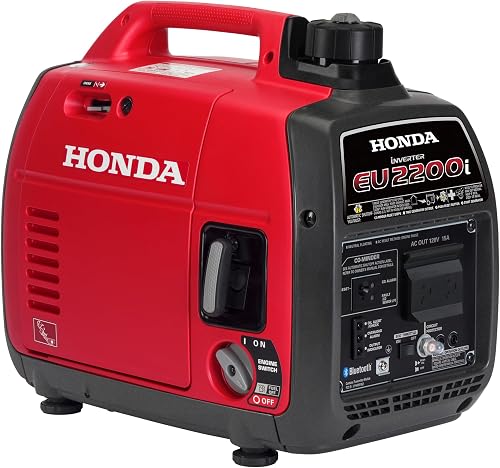 |  |  |  | 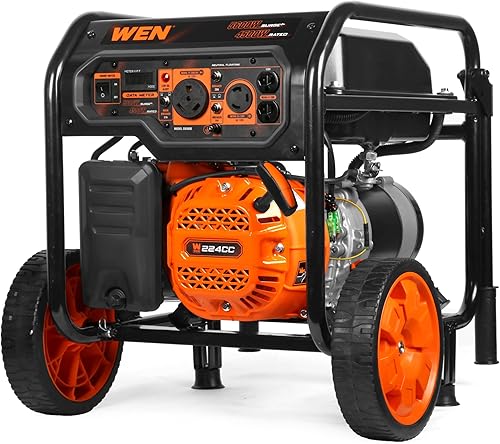 |  |  |
|---|---|---|---|---|---|---|---|---|---|---|
| Product | Westinghouse 12500 Dual Fuel | DuroMax XP13000EH | Westinghouse 14500 Tri-Fuel | Honda EU2200i | Jackery HomePower 3600 Plus | EF ECOFLOW DELTA 3 | Westinghouse 5000 Inverter | WEN 5600-Watt | Westinghouse 4650 Peak | Jackery Explorer 1000 v2 |
| Brand | Westinghouse | DuroMax | Westinghouse | Honda | Jackery | EF ECOFLOW | Westinghouse | WEN | Westinghouse | Jackery |
| Best for | Best Overall | Best for High Output | Also Great | Best for Quiet Camping | Best for Indoor Use | Best for Rapid Charging | — | Best for Simple Backup | Best for CO Safety | Best for Light Backup |
| The listing says | 9500 running/12500 peak watts gas, 8500 running/11200 peak watts propane Remote, electric, and recoil start with 12 hour run time | 13,000 watts of dual fuel power DuroMax engine with push button start | Compatible with WATS200 automatic transfer switch 550cc engine with pressure lubrication | Inverter technology for sensitive electronics Operates at 48 to 57 dB(A) | 3600W output, 3584Wh capacity expandable to 21kWh Ceramic battery cells with 6,000 cycle lifespan | Recharges 0-80% in 1.13 hours 3400W continuous X-Boost mode | 5000 peak/3900 rated watts at <3% THD Remote, electric, and recoil start | 5600 starting and 4500 running watts 4.3-gallon tank for 12.5 hours runtime | 3600 running/4650 peak watts 4 gallon tank with 14 hour runtime | 1,500W AC output with 3,000W surge peak 1,024Wh capacity weighing 23.3 lbs |
| More information | Check Latest Price on Amazon | Check Latest Price on Amazon | Check Latest Price on Amazon | Check Latest Price on Amazon | Check Latest Price on Amazon | Check Latest Price on Amazon | Check Latest Price on Amazon | Check Latest Price on Amazon | Check Latest Price on Amazon | Check Latest Price on Amazon |
1. Westinghouse 12500 Watt Dual Fuel Home Backup Portable Generator
Best for: Reliable whole-home power backup during emergencies.
This model stands out for its versatility, allowing you to switch between gasoline and propane. You get 9500 running watts on gasoline, dropping to 8500 running watts if you switch to propane. It provides enough power to handle major home appliances, and the inclusion of a remote start makes it easy to activate when needed. It’s a robust option that prioritizes power for those who need to keep the lights on and the fridge running.
If you’re choosing between fuels, use gasoline for maximum peak output of 12500 watts. Use propane if you need to store fuel long-term without the risk of gasoline degrading in the tank. A mistake many users make is failing to monitor the VFT display. Check this screen for real-time voltage and frequency updates to ensure your sensitive appliances are receiving stable power.
Compared to the Honda EU2200i, this unit is significantly larger and louder, but it offers much higher wattage for heavy-duty requirements. It isn’t for someone who needs a quiet, lightweight unit for camping or small electronics.
Pros
- Dual fuel capability for flexibility
- Remote electric start included
- High running wattage for appliances
Cons
- Heavy weight for transport
- Loud operation during use
2. DuroMax XP13000EH 13
Best for: Powering a full household during severe outages.
This generator is built for maximum output, featuring an all-metal frame and no plastic parts on the power panel. Its 13,000-watt capacity is designed to handle the most demanding home needs. The dual fuel interface is front-facing, allowing you to switch between gas and propane in seconds.
The 50-amp outlet allows for connection to a transfer switch. Rely on the copper windings rather than aluminum, as copper conducts heat more efficiently to extend the machine’s lifespan.
Unlike the Westinghouse 4650 Peak, this machine is built for heavy-duty, long-term wear and tear. It isn’t for a user looking for a portable, compact solution for occasional, light-duty tasks. If you prioritize portability over raw wattage, choose a smaller digital inverter instead.
Pros
- Extremely high power output
- Durable all-metal construction
- Copper windings for longevity
- No-flat tires for rough terrain
Cons
- Requires significant storage space
- Not designed for quiet operation
3. Westinghouse 14500 Peak Watt Tri-Fuel Home Backup Portable Generator
Best for: Maximum fuel versatility and home integration.
The tri-fuel capability is the star here, allowing you to use gasoline, propane, or natural gas. Its 550cc engine is designed with a pressure lubrication system to reduce friction and wear on critical components. A reusable oil screen further protects the engine by capturing abrasive particles.
This unit offers a bridge between portable convenience and standby power. If you pair it with the Westinghouse WATS200 Automatic Transfer Switch, it provides automatic backup power. This specific integration is exclusive to Westinghouse and isn’t found on competing portable models.
The generator delivers 11,500 running watts and 14,500 peak watts on gasoline. With less than 5% Total Harmonic Distortion (THD), it provides clean power safe for sensitive electronics like computers and phones. Use the 50A or 30A outlets to connect to an interlock kit or manual transfer switch if you prefer a non-automatic setup.
The biggest mistake is neglecting the fuel source requirements before installation. If you plan to use natural gas, ensure your home’s supply line can handle the generator’s demand. If you only need occasional power, propane is often better because it doesn’t degrade like gasoline.
Pros
- Three fuel source options
- Compatible with automatic transfer switches
- Cleaner power for sensitive electronics
Cons
- Requires professional transfer switch installation
- Large footprint for storage
4. Honda EU2200i 2200 Watt Inverter Generator (EU2200ITAN)
Best for: Camping and powering sensitive electronics quietly.
This inverter generator is famous for its low noise levels and clean power output. It’s lightweight enough to move easily and features Bluetooth connectivity for remote monitoring via a smartphone app. It’s the gold standard for those who prioritize quiet operation and fuel efficiency.
The unit operates between 48 and 57 dB(A). Because this is quieter than a normal conversation, it’s the correct choice for campgrounds where noise ordinances are strict. If you need to power a microwave, refrigerator, or hair dryer, this 2200-watt model is sufficient. However, if you’re attempting to run central air conditioning or an entire home, this unit lacks the necessary capacity.
Compared to the Westinghouse 12500 Dual Fuel, this unit provides much less power but is far better for charging sensitive electronics like laptops. It runs for 3.2 to 8.1 hours on a single 0.95-gallon tank. If you live in California, this specific model is unavailable; you must choose the EU1000T1AG or EU3200IAC2 instead.
Pros
- Extremely quiet operation
- Lightweight and portable
- App-based remote monitoring
Cons
- Low total wattage output
- Not for whole-home backup
5. Jackery HomePower 3600 Plus Power Station
Best for: Quiet, emission-free indoor backup power.
This power station is a different kind of backup, offering 3600W of output without any gas or fumes. It uses ceramic membrane battery cells for high-temperature resistance and safety. The luggage-style design makes it easy to roll from a kitchen to a garage as needed.
If you’re preparing for a long-term outage, prioritize the 3584Wh capacity. You can expand this to 21kWh per unit, or up to 43kWh when using multiple units. This configuration is sufficient to sustain a three-person household for over two weeks.
Avoid the mistake of assuming all power stations handle heavy loads equally. This unit provides 3600W, but you can reach 7200W by running units in parallel. Use this dual-voltage 120V and 240V capability for demanding appliances like heaters, pumps, and dryers.
If you need a quick turnaround, use the hybrid AC+DC charging option to reach 100% in two hours. If you’re off-grid, solar charging takes four hours. While the unit is 29.3% lighter than comparable models, remember that it’s still a battery-dependent system. It isn’t for someone who needs to run high-demand appliances for days without a plan for recharging.
Pros
- Silent, emission-free operation
- Portable with wheels and handle
- Expandable capacity
Cons
- Requires recharging time
- Limited by battery capacity
6. EF ECOFLOW DELTA 3 Max Portable Power Station
Best for: Users needing rapid charging during short outages.
This power station features X-Stream technology, which allows it to recharge from 0% to 80% in just over an hour. It provides a 3400W X-Boost mode to handle high-demand appliances like microwaves or fridges. It’s an excellent choice for a quick-response solution when the power grid fails.
If you’re choosing between models, prioritize the Delta 3 Max when your primary concern is how quickly you can recover power after a short-term outage.
A common mistake is assuming the 3400W X-Boost mode replaces a permanent home generator. While it handles surges for power tools or kitchen appliances, it’s built for portability and short-term reliability. Use the EcoFlow app to monitor your real-time consumption if you find your battery draining faster than expected during peak usage.
Pros
- Industry-leading fast recharge time
- Quiet and clean operation
- Smart app energy monitoring
Cons
- Lower total capacity than some stations
- Needs electricity to recharge
7. Westinghouse 5000 Peak Watt Super Quiet Portable Inverter Generator
Best for: Quiet power for RVs and essential home needs.
This unit combines the quiet nature of an inverter with enough power to run basic home essentials. It includes a digital display that tracks your fuel level and remaining run time in real-time. The remote start adds a layer of convenience when you need to activate it quickly.
If you’re choosing between this and a standard generator, look at your output needs. This unit caps at 3900 rated watts. If your appliances exceed this threshold, the inverter will struggle to maintain clean power. You can verify your load by checking the rotating LED data center, which displays your current power output and voltage.
The generator features an economy mode to extend the 3.4-gallon tank up to 18 hours. Use this setting for light loads to save fuel. If you’re running heavy equipment, switch it off to ensure the engine provides consistent power.
Compared to the WEN 5600-Watt, this model is much quieter but offers slightly less peak wattage. It isn’t for the user who needs to run multiple heavy-duty power tools or large appliances simultaneously.
Pros
- Very quiet for its power class
- Informative digital data center
- Remote electric start
Cons
- Lower peak power than non-inverter models
- Not for heavy-duty professional use
8. WEN 5600-Watt Portable Generator
Best for: Simple, straightforward home backup.
This generator is designed for ease of use, featuring a clear control panel and a reliable 224cc engine. It includes a wheel and handle kit to help move it around your property. It provides a balanced amount of power for essential home appliances during a storm.
Compared to heavy-duty, whole-home generators, this unit is much smaller and easier to manage for the average homeowner. It isn’t for those who need a high-wattage solution to run a whole house.
Pros
- Simple, no-nonsense interface
- Included wheel and handle kit
- Reliable mid-range power
Cons
- No remote start
- Basic feature set
9. Westinghouse 4650 Peak Watt Portable Generator
Best for: Compact, portable emergency power.
This is a reliable “just in case” generator. It’s compact, easy to start, and includes essential safety features like a carbon monoxide sensor. It provides 3,600 running watts, enough to keep a refrigerator and a few lights running during an outage.
Compared to the DuroMax XP13000EH, this model is highly portable but lacks the power to run a complete home. If you need to run heavy electrical loads like a central furnace or a high-draw water pump, this unit will likely trip its internal breakers. Stick to essential appliances to avoid overloading the 212cc engine.
The unit includes two 120V household outlets, one RV-ready TT-30R, and one L5-30R receptacle. All outlets feature rubber covers to protect against debris. If you smell fuel upon arrival, don’t worry; all units are factory-tested and may contain residual odors.
Pros
- Compact and easy to store
- Carbon monoxide safety shutdown
- Simple recoil start
Cons
- Lower total wattage
- Limited outlet options compared to whole-home units
10. Jackery Explorer 1000 v2 Portable Power Station
Best for: Light backup for small devices and appliances.
This unit is perfect for keeping phones, laptops, and small kitchen appliances running. It features a 10ms UPS switchover, meaning it can jump in to power your electronics almost instantly when the power grid cuts out. Weighing just 23.3 lbs with a foldable handle, it’s easy to carry.
If you need to charge quickly, use the Jackery App to activate emergency mode. This hits a 0% to 100% charge in 50 minutes. If you aren’t in a rush, stick to the default 1.25-hour mode; this setting prioritizes long-term battery health. You can expect over 4,000 charge cycles, providing a lifespan exceeding 10 years.
Compared to the Jackery HomePower 3600 Plus, this unit is significantly smaller and more portable, but it lacks the power to run heavy items like dryers. It isn’t for someone needing to run high-wattage home equipment. Note that this unit is compatible only with Jackery solar panels.
Pros
- Extremely lightweight and portable
- Very fast recharge time
- UPS feature for electronics
Cons
- Low power for heavy appliances
- Limited run time on high loads
- Requires Jackery-specific solar panels
How to Choose in Sixty Seconds
Assess Your Power Needs
The most important factor is the total wattage of the items you must keep running. Add up the running watts of your refrigerator, sump pump, and essential lights. If the total exceeds 5,000 watts, you need a larger generator like the DuroMax XP13000EH. If you only need to keep computers and phones charged, a smaller inverter unit like the Honda EU2200i is better. Always check the labels on your appliances to find their specific wattage requirements. Overloading a generator can trip its breakers, so ensure your chosen unit has a higher capacity than the sum of your highest-priority items.
Choose Your Fuel Type
Generators run on gasoline, propane, or sometimes natural gas. Gasoline requires proper storage to prevent degradation. Propane has a longer shelf life and is cleaner to burn, making it a favorite for emergency backup. If you want maximum flexibility, look for dual-fuel or tri-fuel models like the Westinghouse 14500 Tri-Fuel. These allow you to switch sources if one becomes unavailable. If you select a gasoline-only model, remember to buy a fuel stabilizer to keep your engine running smoothly during long periods of storage.
Consider Noise and Location
Where you place your generator matters. Local noise ordinances or close neighbors might limit the use of loud, high-wattage generators. If you live in a dense area, an inverter generator like the Westinghouse 5000 Inverter is much quieter. Also, remember that all fuel-burning generators must be used outdoors, away from windows and doors, to prevent carbon monoxide buildup. If you can’t place a generator safely outside, consider a portable power station like the Jackery HomePower 3600 Plus, which emits no fumes.
Frequently Asked Questions
Can I run my home’s central air conditioning with these generators?
Most central air units require a high starting wattage that exceeds standard generator capacity. Only high-output models, such as the DuroMax XP13000EH, can handle this load. You must check your unit’s data plate and potentially install a soft-start kit to manage the initial power spike.
How often should I run my generator to keep it ready?
This keeps the fuel moving through the carburetor and ensures the oil stays distributed throughout the engine. For those who don’t want the maintenance of a gas engine, power stations like the EF ECOFLOW DELTA 3 are a better choice as they don’t have engines to maintain.
What is the difference between a portable generator and a power station?
A portable generator burns fuel to create electricity in real-time, allowing it to run for days with a fuel supply. A power station stores electricity in a battery, offering silent, indoor-safe operation. However, power stations have a limited runtime determined by their battery capacity before requiring a recharge.
Are these generators safe to use in the rain?
Water can cause electrical shorts or damage the sensitive components of the control panel. Always follow the manufacturer’s manual for specific placement instructions. If you live in an area with frequent heavy storms, prioritize a unit with a carbon monoxide sensor for added safety.
Closing
For most homeowners, the Westinghouse 12500 Dual Fuel remains the best all-around choice due to its high power capacity and the convenience of dual-fuel operation. If you require a quieter, more portable solution for sensitive electronics or camping, the Honda EU2200i is the superior pick.
Before you make your final selection, double-check the wattage requirements of your most critical appliances. Many users make the mistake of ignoring starting watts versus running watts, which can lead to overloaded circuits and system shutdowns. Always verify that your chosen unit offers the specific outlet types, such as 30A or 50A, required for your home’s transfer switch.
Ensure you have a safe, outdoor space for operation, as carbon monoxide buildup is a lethal risk. If you’re in California, note that specific models like the Honda EU2200i may have regional restrictions, requiring you to select alternative compliant versions. Once you have confirmed your needs, verify the availability of your preferred fuel type locally to ensure you’re ready for the next power outage.