Choosing the right generator for your home depends on factors like your climate, home size, and the need to power sensitive electronics. You should evaluate fuel flexibility and wattage output to decide between a traditional engine-based generator and a battery-powered station.
All 10 products side by side — scroll sideways to see every column.
| Top Pick | Best for High Power | Best for Automation | Best for Solar | Best for Efficiency | Best for Fast Charging | Best for Electronics | ||||
| Preview |  |  |  |  |  |  |  | 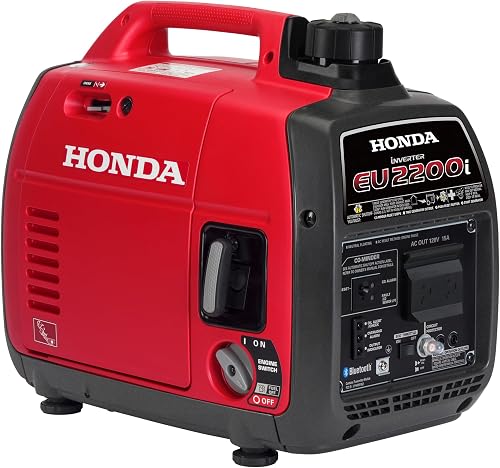 | 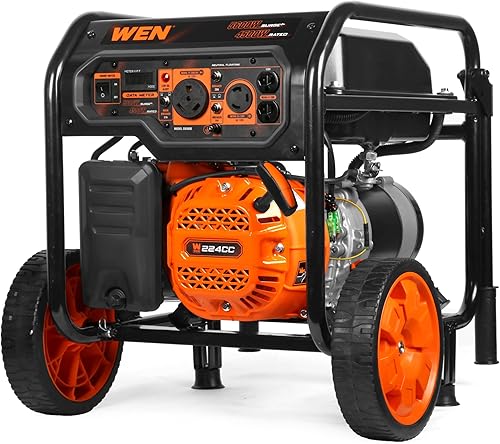 |  |
|---|---|---|---|---|---|---|---|---|---|---|
| Product | Westinghouse 14500 Tri-Fuel | DuroMax XP13000EH | Generac 14kW Standby | Jackery HomePower 3600 Plus | Genkins 8000W Inverter | Westinghouse 6500 Dual Fuel | EcoFlow Delta 3 Max | Honda EU2200i | WEN 5600-Watt Generator | PowerSmart 3800W Inverter |
| Brand | Westinghouse | DuroMax | Generac | Jackery | Genkins | Westinghouse | EF ECOFLOW | Honda | WEN | PowerSmart |
| Best for | Best Overall | Best for High Power | Best for Automation | Best for Solar | Best for Efficiency | — | Best for Fast Charging | — | — | Best for Electronics |
| The listing says | Works with Westinghouse WATS200 transfer switch 550cc engine with pressure lubrication system | 13,000 watts of dual fuel power Robust DuroMax engine design | Automatic outage detection and backup power Electronic fuel and ignition control | 3600W output with 3584Wh capacity High-temp resistant ceramic membrane battery cells | 8000W peak and 6500W rated power 62 dBA noise level at 23 feet | 5300 running watts on gasoline Includes 120V and 30A outlets | Recharges 0–80% in 1.13 hours 3400W continuous X-Boost output | Inverter technology for sensitive electronics Operates at 48 to 57 dB(A) | 5600 starting and 4500 running watts Includes wheel and handle kit | 3800 starting and 3200 running watts Includes 120V, 12V and USB ports |
| More information | Buy on Amazon | Buy on Amazon | Buy on Amazon | Buy on Amazon | Buy on Amazon | Buy on Amazon | Buy on Amazon | Buy on Amazon | Buy on Amazon | Buy on Amazon |
1. Westinghouse 14500 Peak Watt Tri-Fuel Home Backup Portable Generator
Best for: Homeowners needing a powerful, flexible backup for long-term outages.
This unit is designed to act like a standby generator while keeping the portability of a traditional model. It provides enough power to keep major appliances running, and the tri-fuel capability means you can switch between gasoline, propane, and natural gas depending on what you have available. It’s a solid choice if you want to avoid being dependent on a single fuel source during a storm.
However, this generator isn’t for someone who needs a compact or lightweight unit, as its size and output are geared toward heavy-duty home backup. It also requires you to purchase the transfer switch separately to take full advantage of its automatic backup features.
Good if:
- You want the flexibility of three different fuel types.
- You need high output to run large home appliances.
- You prefer the option of a remote electric start.
Skip it if:
- You have limited storage space for a large unit.
- You’re looking for a completely silent power solution.
2. DuroMax XP13000EH 13
Best for: Users who want maximum power and durable all-metal construction.
The DuroMax XP13000EH is built for those who need to keep their entire home running during a severe emergency. Its dual-fuel design allows for gasoline or propane use, and the heavy-duty metal frame ensures it can handle years of use in tough conditions. It’s specifically designed to be transfer-switch ready, making it a straightforward addition to a home’s emergency setup.
This isn’t the right fit for someone who needs a quiet unit, as the focus here is strictly on high-wattage performance. The lack of plastic parts makes it rugged, but it does mean the unit has a significant physical footprint that you should account for before purchasing.
Good if:
- You need high wattage to power your whole home.
- You want a unit built with all-metal construction.
- You prefer the convenience of dual-fuel options.
Skip it if:
- You live in a neighborhood where noise levels are strictly regulated.
- You need a highly portable unit that’s easy to move daily.
3. Generac 14kW Whole Home Generator
Best for: A permanent, fully automated whole-home power solution.
The Generac 14kW Standby is a stationary system that stays outside your home, ready to turn on the moment the power grid fails. It connects directly to your home’s fuel supply, meaning you don’t have to worry about refueling during a long event. It’s the most hands-off option for families who want to ensure their heating, cooling, and lights stay on without any effort.
This unit features electronic fuel and ignition control to optimize consumption, which lowers emissions and improves efficiency compared to standard Guardian Series models. If you live in a region prone to harsh winters, the sloped roof and rear intake design actively prevent ice and snow intrusion. These features ensure the system remains ready when you need it most.
This isn’t for someone who moves frequently or wants a portable generator for camping. Because it’s a permanent installation, it requires professional setup and isn’t designed to be moved.
Good if:
- You want a system that turns on automatically.
- You want to avoid the hassle of manual refueling.
- You want mobile app monitoring for performance updates via cellular connectivity.
- You need integration with smart thermostats or home battery systems.
Skip it if:
- You want a portable generator for camping.
- You aren’t prepared for a permanent installation process.
4. Jackery HomePower 3600 Plus & 2x200W Solar Panels
Best for: Someone wanting a quiet, solar-ready backup for sensitive electronics.
The Jackery HomePower 3600 Plus is a modern power station that uses battery technology instead of an engine. It’s perfect for running electronics like laptops and TVs because it provides clean, stable power without the noise or fumes of gas generators. Its plug-and-play design makes it very approachable for someone who isn’t comfortable with engine maintenance.
The unit delivers 3600W output, which jumps to 7200W in parallel. It handles pumps, heaters, and dryers with ease. You can expand the 3584Wh capacity up to 21kWh per unit, or 43kWh with multiple units, enough to support a three-person household for over two weeks.
This unit isn’t designed for powering heavy-duty appliances for weeks at a time without access to sun or a way to recharge. While it’s expandable, it’s a different experience than a traditional gas generator and requires a different mindset regarding power management. Use the hybrid AC+DC method if you need a full charge in just two hours.
Good if:
- You want a quiet, fume-free power solution.
- You need a unit that’s easy to move on wheels.
- You’re interested in using solar panels for charging.
Skip it if:
- You need to run high-draw appliances indefinitely.
- You don’t have a way to recharge the battery during long outages. Note that your solar panels and power station may arrive in separate packages.
5. Genkins 8000W Portable Quiet Inverter Generator
Best for: Homeowners who need both high output and quiet operation.
The Genkins 8000W Inverter fills the gap between large, loud generators and smaller, quiet ones. It uses inverter technology to produce pure sine-wave power with less than 2% total harmonic distortion, which is safer for sensitive devices like laptops and refrigerators. While it delivers 6500W of rated power, it remains surprisingly quiet at 62 dBA from 23 feet away.
This generator isn’t for someone who wants the absolute lowest weight, as the 327cc engine and inverter technology make it 112 lbs. If you need to move it frequently, use the built-in telescopic handle and explosion-proof tires rather than trying to lift it alone.
To maximize your runtime, engage the ESC mode. This setting intelligently adjusts engine speed to save fuel. You’ll get 8 hours of continuous operation at 50% load, but switching to a 25% load extends that to 16 hours. If the digital display shows a low-oil warning, stop immediately to prevent engine damage.
Good if:
- You need clean power for sensitive home electronics.
- You want a balance between high power and low noise.
- You prefer an electric start for fast ignition.
Skip it if:
- You’re looking for the smallest, most lightweight generator available.
- You don’t need inverter-level power quality for your appliances.
6. Westinghouse 6500 Watt Dual Fuel Home Backup Portable Generator
Best for: A reliable mid-range option for essential home backup.
This model provides a practical amount of power for running the most important items in your home, like a refrigerator and a few lights. Its dual-fuel capability allows for gasoline or propane, giving you options if one fuel is unavailable. When running on gasoline, you get 5300 running watts, while propane provides 4800 running watts. The 4.7-gallon tank offers up to 14.5 hours of runtime, letting you prioritize fuel efficiency during extended outages.
It comes with the necessary tools, oil, and a funnel to get started right out of the box. You should verify your home’s transfer switch setup before purchase, as this unit features an L14-30R 30A receptacle specifically designed for that connection.
This isn’t the best choice if you’re trying to power a large house with central air conditioning. Pushing this 274cc engine beyond its rated capacity will trigger the automatic low-oil or carbon monoxide shutdown features.
Good if:
- You want a straightforward, mid-range backup solution.
- You appreciate having both gasoline and propane options.
- You want a kit that includes most of what you need to start.
Skip it if:
- You need to power a very large home.
- You require a high-end unit with automatic backup features.
7. EF ECOFLOW DELTA 3 Max Portable Power Station
Best for: Users who need fast charging and app-based energy management.
The EcoFlow Delta 3 Max is built for speed, offering an impressive recharge time that gets you to 80% capacity in just 1.13 hours. Its X-Boost technology helps it handle high-demand appliances up to 3400W, and the mobile app allows you to track your energy usage in real-time. It’s a very smart, modern device for those who like to monitor their home’s power consumption.
It’s fast enough to keep computers and medical devices running without a flicker during a sudden outage.
This isn’t for someone who prefers a traditional gas generator that can run for days on a tank of fuel. The 2048Wh battery capacity is excellent for a portable station, but it does rely on having a power source to recharge it between uses. If you’re off-grid for long stretches, ensure you have a solar array ready to maintain your charge.
Good if:
- You need a unit that charges very quickly.
- You like managing your power usage via an app.
- You need to power sensitive electronics safely.
Skip it if:
- You aren’t comfortable with battery-based power systems.
- You prefer a traditional mechanical generator.
8. Honda EU2200i 2200 Watt Inverter Generator (EU2200ITAN)
Best for: Someone who values legendary reliability and extreme quietness.
The Honda EU2200i is well-regarded for its ability to run quietly and consistently, making it a standard choice for those who need a dependable, portable power source. It’s small enough to lift easily at just over 47 pounds and runs efficiently for 3.2 to 8.1 hours on a single 0.95-gallon tank. The inclusion of a smartphone app for remote monitoring and service reminders adds a modern touch to a classic design.
This unit isn’t for powering a whole home or heavy appliances like large air conditioners. The listing doesn’t mention its suitability for large-scale home backup. If you reside in California, you must choose model EU1000T1AG or EU3200IAC2 instead, as this specific unit is unavailable there.
Good if:
- You need something extremely quiet, operating between 48 and 57 dB(A).
- You prioritize brand reliability, backed by a multi-year residential warranty.
- You’re powering small electronics, microwaves, or refrigerators.
Skip it if:
- You need to power large home appliances.
- You want high wattage for a whole-house backup.
- You live in California.
9. WEN 5600-Watt Portable Generator
Best for: A buyer who wants simple, no-nonsense operation.
The WEN 5600-Watt Generator is designed for those who want a reliable source of power without the complexity of advanced features or apps. It provides 5600 starting watts and 4500 running watts, enough to support essential home needs. The included wheel and handle kit makes it easy to move the unit between uses.
If you need to power a camper, use the RV-ready 120V 30-amp TT-30R outlet. For home backup, the panel includes a transfer-switch-ready 120V 30-amp NEMA L5-30R twist lock receptacle. You can expect up to 12.5 hours of run time at a half-load from the 4.3-gallon gas tank.
This machine is a traditional, 224cc engine model. It will be louder than an inverter and requires standard engine maintenance. If you prioritize silence or digital connectivity, look elsewhere. However, for a straightforward, mechanical solution backed by a comprehensive limited warranty, this unit is a capable workhorse.
Good if:
- You want a simple, easy-to-use generator.
- You need enough power for basic home essentials.
- You want a unit that’s easy to transport.
Skip it if:
- You need whisper-quiet operation.
- You’re looking for a high-tech power station.
10. PowerSmart 3800 Watt Portable Inverter Generator
Best for: Someone needing a lightweight, portable inverter for sensitive home electronics.
The PowerSmart 3800W Inverter is a great choice if you need to power devices that are sensitive to power spikes, like computers and phones. Because it’s an inverter, it delivers clean power with a Total Harmonic Distortion under 3% while remaining quiet enough for residential use. It’s also quite light, weighing only 47 pounds, which makes it easy to store away when not needed.
This unit isn’t intended for heavy-duty home backup where you’re trying to run a full house. It’s a portable, supplemental power source that’s best used for keeping specific important items running during a power outage. Always check the wattage requirements of your equipment before plugging in to avoid overloading the system.
Never use this generator indoors or in partially enclosed areas. You must only use it outdoors to prevent carbon monoxide buildup.
Good if:
- You need clean power for sensitive electronics.
- You want a lightweight and compact generator.
- You prefer quiet operation at 59 dBA.
Skip it if:
- You have a large home with high power demands.
- You’re looking for a permanent standby solution.
Where These Overlap
Most portable generators in this list share common ground in their core functions. For instance, the Westinghouse 6500 Dual Fuel, the WEN 5600-Watt, and the Westinghouse 14500 Tri-Fuel are all designed to be transfer-switch ready, meaning they’re built for the specific purpose of connecting to a home’s electrical panel. If you’re looking at these, the choice often comes down to the wattage you actually need rather than the brand. Similarly, the inverter generators like the Genkins 8000W and the PowerSmart 3800W are both aiming to provide “clean” power for sensitive electronics. If your primary concern is safely charging a laptop or running a modern television, both will perform that job well, with the main difference being the total power capacity available.
Conversely, there’s a clear divide between engine-driven generators and battery-based power stations like the Jackery HomePower 3600 Plus and the EcoFlow Delta 3 Max. The battery stations are fundamentally different; they’re silent, require no fuel, and excel at indoor or near-home use, whereas engine generators are best for long-duration outdoor use. To stay safe and effective, always follow the official safety guidance regarding generator operation, specifically regarding carbon monoxide and outdoor placement.
Still Not Sure?
How often will I really use it?
If you live in an area with frequent, multi-day outages, a permanent solution like the Generac 14kW Standby is the best way to ensure you never have to think about power again. These systems are always ready and require no setup during a storm. However, if you only experience power loss once or twice a year for a few hours, a portable unit like the Westinghouse 6500 Dual Fuel provides excellent backup without the need for a major installation. Consider if you’re willing to manage the machine yourself or if you want a fully automated system.
What do I already own that this has to work with?
Think about your home’s current setup. If you already have a transfer switch installed, look for a generator like the DuroMax XP13000EH that’s explicitly “transfer-switch ready.” If you don’t have one and don’t plan to install one, you’ll need a generator with plenty of standard household outlets, like the Genkins 8000W Inverter. Check your appliances to see if they need 120V or 240V power, as this will dictate which outlets are necessary on your new generator. A mismatch here can make the generator much harder to use in an emergency.
What am I most likely to regret choosing?
The most common regret is buying a generator that’s either too loud for your neighborhood or too heavy to move when you need it most. If you live in a dense residential area, choosing a noisy, open-frame generator might cause issues with neighbors, making the Honda EU2200i or the PowerSmart 3800W Inverter much better choices. Alternatively, if you buy a high-capacity generator that you can’t physically move from your garage to your patio, you’ll struggle to use it. Always check the weight and the noise level (dBA) before you finalize your decision.
Frequently Asked Questions
Do I need a transfer switch for home use?
A transfer switch is the safest way to connect a generator to your home’s electrical system by preventing back-feeding into the grid. While many generators are transfer-switch ready, you can also use heavy-duty extension cords to power individual appliances directly. A transfer switch is recommended for powering furnaces or well pumps.
How do I maintain a gas generator?
Maintenance for gas generators involves regular oil changes, air filter cleaning, and fuel management. Using fuel stabilizer helps if you store the unit for long periods, or you can use propane, which does not degrade over time. Always consult your manual for specific oil change intervals and service requirements.
Are battery power stations better than gas generators?
Battery power stations are quiet and produce no exhaust, making them ideal for sensitive electronics during short-term outages. Gas generators are superior for long-duration outages because you can refuel them to keep them running indefinitely. If you need power for days at a time, a gas generator is the practical choice.
What size generator do I need for my house?
The size of the generator you need depends on the total wattage of the appliances you want to run simultaneously. Make a list of your must-have items and add up their starting and running watts. Choose a generator that offers a rated wattage at least 20% higher than your total load.
Conclusion
Investing in a reliable backup system brings real peace of mind when the power goes out. Before you make your final purchase, check your local building codes or consult with a licensed electrician to ensure your setup is safe. You’ll be glad you’re prepared whenever the next storm rolls through your neighborhood.