Choosing the best portable generator depends on your fuel access, power needs, and comfort with maintenance. Traditional fuel-burning generators offer high power for long durations, while battery stations provide quiet, plug-and-play reliability. For whole-house runtime, the Westinghouse 14500 Tri-Fuel is a top choice, while the EcoFlow DELTA Pro is the standard for silent, low-maintenance electronics backup.
All 10 products side by side — scroll sideways to see every column.
| Top Pick | Best for High Demand | Best for Silent Power | Best for Remote Start | Best for Expandability | Best for Fast Charging | |||||
| Preview |  |  |  |  |  |  |  | 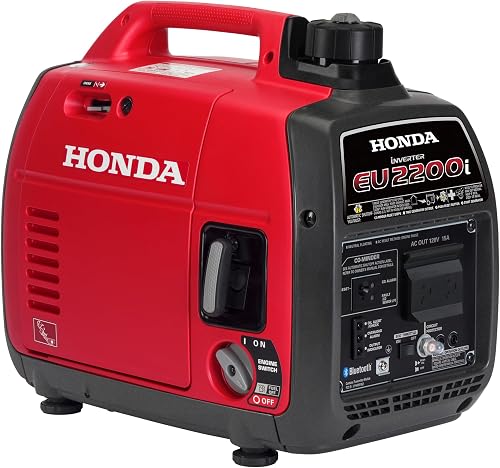 |  |  |
|---|---|---|---|---|---|---|---|---|---|---|
| Product | Westinghouse 14500 Tri-Fuel | DuroMax XP13000EH | EcoFlow DELTA Pro | Westinghouse 12500 Dual Fuel | Jackery HomePower 3600 Plus | Westinghouse 6500 Dual Fuel | EcoFlow DELTA 3 Max | Honda EU2200i | Westinghouse 9500 Dual Fuel | Jackery HomePower 3000 |
| Brand | Westinghouse | DuroMax | EF ECOFLOW | Westinghouse | Jackery | Westinghouse | EF ECOFLOW | Honda | Westinghouse | Jackery |
| Best for | Best Overall | Best for High Demand | Best for Silent Power | Best for Remote Start | Best for Expandability | — | Best for Fast Charging | — | — | — |
| The listing says | Compatible with Westinghouse WATS200 transfer switch 550cc engine with pressure lubrication system | 13,000 watts of power Dual fuel technology | 3600Wh LFP battery capacity 3600W AC output with X-Boost technology | 9500 running and 12500 peak watts Includes 50A, 30A, and 20A outlets | 3600W output and 3584Wh capacity 6,000 battery cycles and 10-year lifespan | 5300 running and 6500 peak watts Includes 30A and 20A outlets | Recharges 0–80% in 1.13 hours 3400W continuous X-Boost output | Inverter technology for sensitive electronics Operates at 48 to 57 dB(A) | 7500 rated and 9500 peak watts Two 20A and one 30A outlets | 3600W output and 3072Wh capacity UPS switches within 20ms |
| More information | Buy on Amazon | Buy on Amazon | Buy on Amazon | Buy on Amazon | Buy on Amazon | Buy on Amazon | Buy on Amazon | Buy on Amazon | Buy on Amazon | Buy on Amazon |
1. Westinghouse 14500 Peak Watt Tri-Fuel Home Backup Portable Generator
Best for: Someone who wants long-term power flexibility using natural gas or propane.
This generator is for the buyer who wants the power of a standby unit in a portable frame. The 550cc engine uses pressure lubrication to extend its life, making it a solid choice for frequent use during extended power outages. It runs on gasoline, propane, or natural gas, giving you options depending on what fuel you can store or access.
The unit is built for heavy-duty demand, offering 11,500 running watts. If you require automatic backup, pair this with the WATS200 transfer switch. This combination creates a seamless transition that mimics a permanent standby system. If you prefer a manual setup, the 50A and 30A outlets accommodate interlock kits or manual transfer switches easily.
It isn’t for someone who needs a light, easy-to-carry unit, as its size and weight are significant. You must also account for the installation requirements of the transfer switch, which is sold separately.
Good if:
- You have access to a natural gas line.
- You need enough power for large appliances.
- You want a unit that supports automatic transfer switching.
Skip it if:
- You have limited storage space for a heavy machine.
- You strictly need a quiet, indoor-friendly power source.
- You don’t have the budget to purchase the required transfer switch for home integration.
2. DuroMax XP13000EH 13
Best for: A homeowner needing maximum power for high-demand tools or appliances.
This unit focuses on raw output, providing 13,000 peak watts to keep a whole home running during severe weather. It features an all-metal frame and panel construction. The dual-fuel design allows you to switch between gas and propane quickly via the front interface.
Because it’s built for power, it’s a heavy machine that requires a sturdy location. It isn’t for users who prioritize quiet operation, as the focus here is strictly on muscle and durability.
Copper conducts heat more efficiently, which directly extends the operational life of the generator under heavy loads. If you plan to run the unit for extended periods, this material choice is the primary factor in preventing premature failure.
Good if:
- You have many high-wattage appliances to run at once.
- You prefer metal construction over plastic components.
- You need a simple fuel-switching interface.
- You require a 50-amp outlet for a transfer switch.
Skip it if:
- You need a whisper-quiet generator for a residential area.
- You want a unit that’s easy to move frequently.
3. EF ECOFLOW Portable Power Station 3600Wh DELTA Pro
Best for: Someone who wants silent, high-capacity storage without burning fuel.
The DELTA Pro uses a 3600Wh LFP battery to provide power without the noise or fumes of an engine. You can charge it via wall outlets, solar panels, or even EV stations. It’s a flexible system that allows you to expand capacity from 3.6kWh up to 25kWh by adding extra batteries or smart generators.
This is a high-tech solution that relies on software and battery chemistry rather than mechanical force. While a single unit provides 3600W, you can pair two units to reach 7200W. If you need to power heavy-duty devices, check the wattage requirements first; if your total draw exceeds the capacity, the system will eventually deplete. Users often mistake the X-Boost technology for a permanent output increase; remember it only helps reach 4500W for specific loads, not continuous high-draw operation.
Good if:
- You need silent, indoor-safe backup power.
- You want to use solar energy for recharging.
- You appreciate app-based monitoring and control.
Skip it if:
- You don’t have a way to recharge the unit during long outages.
- You need to power very high-draw equipment for long durations without a plan for solar or wall-outlet input.
4. Westinghouse 12500 Watt Dual Fuel Home Backup Portable Generator
Best for: A buyer who wants a balance of high wattage and fuel flexibility.
This model provides 9,500 running watts on gasoline, making it capable of handling standard home essentials like refrigerators and pumps. When you switch to propane, you get 8,500 running watts. If you’re unsure which fuel to use, prioritize gasoline for maximum power output and propane for cleaner storage.
The inclusion of a remote start key fob makes it easier to get power running when you aren’t standing right next to the generator. The engine features a cast iron sleeve for durability, which is a key factor for long-term reliability. Always monitor the VFT display for real-time voltage and frequency updates to ensure your appliances receive stable power.
It isn’t for a user who wants the absolute highest output available or the absolute lowest noise profile. If you notice the digital hour meter approaching maintenance intervals, follow the manual’s oil change schedule to protect the 457cc engine.
Good if:
- You want a remote-start feature for convenience.
- You need a reliable, heavy-duty engine.
- You use both gasoline and propane.
Skip it if:
- You’re looking for a compact, lightweight unit.
- You need a unit that runs on natural gas.
5. Jackery HomePower 3600 Plus Power Station
Best for: A household wanting an expandable, user-friendly power station.
This unit is designed to be the lightest in its class for a 3.6kWh capacity, featuring wheels and a handle for easy movement. It uses ceramic membrane battery cells tested at 302 °F to prevent thermal runaway, a vital safety feature for indoor use. While the base unit provides 3584Wh, you can expand this to 21kWh per unit or 43kWh using multiple units. This capacity allows you to power a three-person household for over two weeks.
It’s an excellent “plug-and-play” device, but it isn’t for someone who wants to perform their own engine maintenance or use traditional liquid fuels. If you need 240V output, you must link units in parallel to reach that voltage and double the output to 7200W.
Good if:
- You need a portable, wheeled power station.
- You prefer a low-maintenance, fuel-free system.
Skip it if:
- You prefer the familiarity of a gas-powered engine.
- You need to run high-heat appliances for very long periods, as the 3584Wh limit will deplete faster under heavy loads than an expanded system would.
6. Westinghouse 6500 Watt Dual Fuel Home Backup Portable Generator
Best for: Someone needing a mid-range backup for essential home circuits.
This generator is more compact than larger models but provides enough power for basic essentials. With 5,300 running watts on gasoline or 4,800 running watts on propane, it’s suited for a manual transfer switch setup. The unit features a 274cc 4-stroke engine with a cast iron sleeve for durability.
If you’re choosing between fuels, remember that gasoline yields higher peak power at 6,500 watts compared to 5,800 watts on propane. Use the 120/240V selector switch to match your specific household circuit needs.
The unit includes a CO sensor and automatic low oil shutdown. These safety features trigger a total engine stop if dangerous conditions arise. Don’t rely on this unit to power an entire house with central air conditioning and multiple heavy-draw appliances simultaneously.
Good if:
- You have limited storage space.
- You want a dual-fuel option in a smaller frame.
- You need a reliable, mid-range power output.
Skip it if:
- You need to run multiple high-wattage appliances at once.
- You require more than 5,300 running watts for your essential circuits.
7. EF ECOFLOW DELTA 3 Max Portable Power Station
Best for: Users who need fast charging and reliable, quiet backup.
The DELTA 3 Max stands out for its ultra-fast charging, reaching 80% capacity in just 1.13 hours. It acts as a seamless UPS, switching to battery power in under 10ms during an outage to protect sensitive electronics like medical devices. With a 2048Wh LFP battery, it’s engineered for 10 years of daily use.
If you’re choosing between models, prioritize this unit if you have frequent short-term outages. The 3400W X-Boost mode allows you to run high-demand appliances like microwaves or power tools. However, don’t rely on this unit for off-grid living if you lack a consistent recharge source.
A common mistake is assuming the 3400W X-Boost capacity applies to all devices indefinitely. X-Boost is intended for high-demand surges; check your appliance’s continuous wattage to ensure it stays within the standard output range.
Good if:
- You need a fast-charging solution for power outages.
- You want to protect sensitive electronics like computers.
- You need a quiet, low-maintenance backup system.
Skip it if:
- You don’t have a way to recharge frequently.
- You have very high continuous power demands that exceed the unit’s base capacity.
8. Honda EU2200i 2200 Watt Inverter Generator (EU2200ITAN)
Best for: A user who needs a quiet, portable, and reliable inverter.
Honda is well-known for the quiet operation of its generators, and the EU2200i is no exception. It’s ideal for camping or light home backup where noise is a major concern. Operating between 48 and 57 dB(A), it produces less noise than a normal conversation. It includes Bluetooth app connectivity to monitor power levels and service reminders.
The unit weighs just over 47 pounds and runs for 3.2 to 8.1 hours on a single 0.95-gallon tank. Its Eco Throttle System maximizes fuel efficiency during lighter loads. If you live in California, you must choose the EU1000T1AG or EU3200IAC2 models instead, as this unit isn’t available in that state.
It’s a high-quality machine, but it isn’t for someone who needs to power an entire home or multiple large appliances at once. The integrated CO-MINDER system provides safety by monitoring carbon monoxide levels, automatically shutting down the unit before levels become dangerous.
Good if:
- You prioritize extremely quiet operation.
- You want a highly portable, lightweight unit.
- You appreciate smartphone monitoring features.
Skip it if:
- You need to power a full house.
- You require high-wattage output.
9. Westinghouse 9500 Peak Watt Dual Fuel Home Backup Portable Generator
Best for: A homeowner who needs versatile, dual-fuel power for essential circuits.
This generator offers 7,500 running watts on gasoline, providing a great middle ground for most home backup needs. It’s transfer-switch ready and features a remote start, which makes it very convenient during bad weather. The CO sensor and low-oil shutdown provide added safety during operation.
If you switch to propane, expect a slight drop to 6,750 rated watts. Use gasoline when you need maximum output for heavy loads. Switch to propane for cleaner storage and to avoid fuel degradation during long periods of inactivity.
Many users fail to account for the residual fuel odor common with factory-tested units. Don’t be alarmed if you detect a scent upon unboxing; this is a standard result of functional testing.
It’s a solid performer, but it isn’t for those who need the highest wattage possible for large home additions or heavy-duty workshops.
Good if:
- You want a balance of power and portability.
- You need dual-fuel options for convenience.
- You want a remote-start feature.
Skip it if:
- You need to run very large, power-hungry appliances.
10. Jackery HomePower 3000 Portable Power Station
Best for: A user wanting a compact, large-capacity power station.
This unit is designed to be space-efficient, with a high-capacity 3072Wh battery in a frame 47% smaller and 43% lighter than comparable models. It functions as a UL-certified UPS with a 20ms switch time, keeping medical refrigerators, security cameras, and routers running without a flicker.
If you’re choosing between this and a gas generator, look at your specific needs. Use this if you require silent, indoor-safe power for sensitive electronics. If you need to power a household for more than 15 hours without any access to solar panels or AC wall outlets, a gas generator remains the more practical choice.
The unit utilizes LiFePO4 batteries rated for 4,000 cycles. You should avoid draining the battery to zero repeatedly, as the ChargeShield 2.0 technology is optimized to manage charging speeds and extend the total lifespan of the cells.
Good if:
- You need a compact, high-capacity power station.
- You want a seamless UPS function for electronics.
- You need a unit that’s easy to move.
Skip it if:
- You prefer a gas-powered generator for long-term outages.
- You have no way to recharge the battery during an emergency.
Where These Overlap
These generators overlap in their intended use, particularly the Westinghouse dual-fuel models. The 12500, 9500, and 6500 models share similar design philosophies, including cast iron engine sleeves and CO sensor safety features. The choice between them is often a matter of how many watts your specific home circuit requires.
If you’re choosing between the 12500 and the 9500, look at the running wattage of your most critical appliances. If you have a well pump and a large refrigerator, the extra overhead of the 12500 is safer. A common mistake is ignoring the starting wattage of motor-driven appliances, which can be significantly higher than their running wattage. Failing to account for this surge can cause the generator to trip or stall during startup.
Similarly, the Jackery and EcoFlow power stations occupy a space as silent, indoor-friendly alternatives to fuel generators. They both use LFP batteries and prioritize fast, flexible charging. The primary difference often comes down to the user interface and the specific output ports available.
When choosing between these, consider the existing equipment you own. If you have a specific brand of solar panels or an existing battery ecosystem, sticking to that brand is usually the smartest move. If you need to power sensitive electronics like computers, prioritize models with low total harmonic distortion (THD). If you require seamless backup for medical devices, look for units with a transfer time of 10ms or less to ensure your equipment remains powered without interruption during a grid failure.
Still Not Sure?
How often will I really use this?
If you live in an area with frequent, short power outages, a battery-powered station like the Jackery HomePower 3600 Plus is excellent because it’s silent and requires no fuel storage. You can keep it plugged into a wall to act as a UPS. However, if you live in a region prone to long-term outages lasting several days, you need the infinite runtime potential of a fuel generator like the Westinghouse 14500 Tri-Fuel.
What do I already own that this has to work with?
Think about your current electrical setup. Do you have a manual transfer switch or an interlock kit installed at your breaker panel? If you do, you should choose a generator that supports a 50A or 30A twist-lock connection, like the DuroMax XP13000EH. If you have no specialized setup, you might prefer a power station like the EcoFlow DELTA Pro, which can plug directly into your home’s wall outlets or be used with simple extension cords for specific appliances.
What am I most likely to regret choosing?
The most common regret is buying a generator that’s too heavy to move or too loud for your neighborhood. If you have a small lot and close neighbors, a loud, high-wattage unit like the DuroMax XP13000EH will cause friction. If you aren’t physically able to move a heavy machine, you’ll regret buying a gas generator without wheels.
Choosing the right backup is about matching your power needs to your living situation. If you have a large home and reliable access to fuel, a high-wattage model like the Westinghouse 14500 Tri-Fuel is your best path. If you live in a dense neighborhood and value quiet, indoor-friendly power, the EcoFlow DELTA Pro is the superior choice. Before you decide, check your home’s electrical panel and identify your most critical appliances; this determines the exact wattage you need. Once you have that figure, pick the unit that covers your essentials with a little extra room for growth.
Frequently Asked Questions
Can I run a portable generator inside my house?
No, you should never run a fuel-burning generator inside, including in a garage, basement, or shed. These generators emit carbon monoxide, which is odorless and deadly. Even with doors open, the gas can accumulate quickly. If you need power inside, you must use a battery-powered station like the EcoFlow DELTA 3 Max or the Jackery HomePower 3000.
What is the difference between running watts and peak watts?
Running watts is the power a generator provides continuously, while peak watts is the extra power needed to start motors. When choosing a generator like the Westinghouse 12500, ensure its running wattage exceeds the total wattage of all your appliances. Always check appliance labels to confirm their specific power requirements.
Do I need a transfer switch for home backup?
A transfer switch is not required if using extension cords, but it is recommended for powering home circuits like lights or heating. It connects the generator to your breaker panel to prevent back-feeding utility lines. Most Westinghouse and DuroMax models listed here are transfer switch ready for easy integration.
How do I maintain a fuel-powered generator?
Maintenance for fuel-powered generators involves regular oil changes, air filter checks, and using fuel stabilizers for long-term storage. Propane or natural gas maintenance is generally easier because these fuels do not degrade like gasoline. Always consult your user manual for the specific maintenance schedule recommended for your model.