Finding the best generator for camper depends entirely on your specific setup. A weekend camper with a small trailer has different needs than someone running a full-sized RV with air conditioning and electric heat. You must decide if you prioritize raw power to run everything at once, or a quiet, compact unit that’s easy to move. The most common choices split between those needing high-wattage versatility and those wanting lightweight, portable convenience.
All 10 products side by side — scroll sideways to see every column.
| Top Pick | Best for Dual Fuel | Best for Portability | Best for Quiet Power | Best for EV Charging | Best for Long Runtime | Best for Cooling | Best for Easy Transport | Best for Weekend Camping | ||
| Preview |  |  | 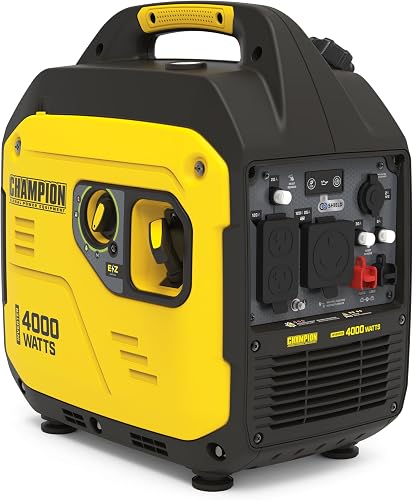 |  | 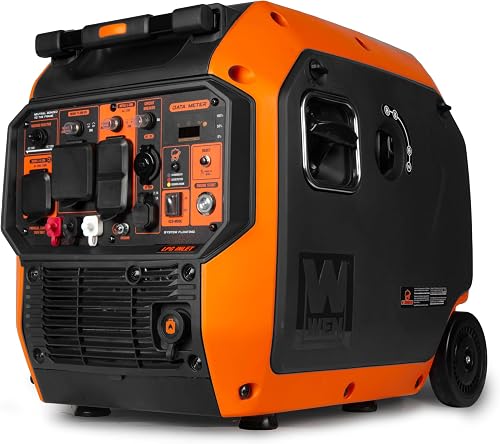 |  |  |  |  |  |
|---|---|---|---|---|---|---|---|---|---|---|
| Product | WEN 4800-Watt Inverter | Westinghouse 4650 Dual Fuel | Champion 4000-Watt Inverter | Westinghouse 2550 Inverter | WEN 6800-Watt Inverter | Power Equipment 4400 Inverter | 2800-Watt Portable Inverter | Genkins 4500W Inverter | PowerSmart 3800 Inverter | 4000W Gas-Powered Inverter |
| Brand | WEN | Westinghouse | Champion Power Equipment | Westinghouse | WEN | Oxseryn | Oxseryn | Genkins | PowerSmart | Evernexta |
| Best for | Best Overall | Best for Dual Fuel | Best for Portability | Best for Quiet Power | Best for EV Charging | Best for Long Runtime | — | Best for Cooling | Best for Easy Transport | Best for Weekend Camping |
| The listing says | 224cc engine, 4800 surge watts, 4000 rated watts Produces clean power for sensitive electronics | 4650 peak watts, 3600 rated watts, 14-hour runtime Includes 5-20R, TT-30R, and L5-30R outlets | Weighs less than 49 pounds 4000 starting watts, 3000 running watts, 64 dBA | 2550 peak watts, 1900 rated watts, 43 lb Features automatic low oil shutdown | 224cc engine, dual-fuel gasoline and propane 240V configuration for Level 2 EV charging | 4400 peak watts and 3400 running watts Includes 2 120V AC, 1 12V DC, 1 RV port | 2800 peak watts, 2000 running watts, 1.1 gallon tank Includes 2 120V AC, 1 12V DC, 1 USB, 1 Type-C | 4500 peak watts, 3700 running watts, under 3% THD 212cc 4-stroke OHV engine | 3800 starting watts, 3200 running watts, under 3% THD Includes 5-20R, L5-30R, 12V DC, and USB ports | 208cc engine, 4000 starting watts, 3400 running watts Includes 30A, 2 120V AC, and 1 12V DC ports |
| More information | Buy on Amazon | Buy on Amazon | Buy on Amazon | Buy on Amazon | Buy on Amazon | Buy on Amazon | Buy on Amazon | Buy on Amazon | Buy on Amazon | Buy on Amazon |
1. WEN Quiet and Lightweight 4800-Watt RV-Ready Portable Inverter Generator
Best for: Campers who need reliable power for multiple large appliances simultaneously.
This generator is built for those who don’t want to choose between running a microwave and an air conditioner. Its 224cc engine provides 4000 rated watts, which handles the start-up surges of common RV equipment easily. The unit produces clean power, ensuring your smartphones, tablets, and laptops remain safe from electrical damage.
The inclusion of a CO shutdown sensor is a key safety feature for those sleeping near their equipment. If the sensor detects dangerous levels of carbon monoxide, it automatically turns off the generator. You should also utilize the fuel shutoff feature before storage. This drains the remaining fuel in the carburetor, which significantly maximizes the lifespan of your engine.
The unit includes wheels and a telescoping handle to help move its weight around the campsite. It isn’t for the camper who needs to carry their generator by hand over long distances. If you have limited storage space, consider that this model prioritizes capacity over ultra-light travel.
Good if:
- You have a large RV with multiple power-hungry appliances.
- You need a variety of outlets, including four 120V receptacles and a dedicated TT-30R.
- You want the added safety of an automatic carbon monoxide sensor.
Skip it if:
- You have limited storage space in your vehicle.
- You prefer a lightweight unit that one person can carry easily.
2. Westinghouse 4650 Peak Watt Dual Fuel Portable Generator
Best for: Campers who want the flexibility of using gasoline or propane.
Dual fuel capability is a massive advantage if you already carry propane tanks for your RV cooking or heating. This unit lets you switch between fuels without complicated modifications. You get 3600 rated watts on gasoline, but expect a slight drop to 3240 rated watts when switching to propane. The cast iron sleeve in the 212cc engine is a design choice aimed at longevity for frequent users.
Because it’s a heavier unit, it requires a stable, flat surface to operate safely. It isn’t intended for users who want a “grab-and-go” solution for short, light-duty weekend trips. If you notice a faint fuel odor upon unboxing, note that the listing states all Westinghouse portable generators are functionally tested in the factory.
Good if:
- You prefer the convenience of running your generator on propane.
- You want a unit that includes a fuel gauge for easy monitoring.
- You value having multiple outlet types, including the RV-ready TT-30R receptacle.
Skip it if:
- You don’t want to deal with the weight of a dual-fuel system.
- You only need power for very small, low-wattage electronics.
- You require more than 14 hours of run time without refueling your four-gallon tank.
3. Champion 4000-Watt RV Ready Portable Inverter Generator
Best for: Campers who prioritize weight savings without sacrificing power.
At under 49 pounds, this is an outlier in the 4000-watt category. It’s ideal for those who need to lift their generator in and out of a truck bed regularly. If you struggle to move heavy equipment, this unit’s portability makes it a standout choice.
The parallel capability means you can eventually pair it with a second unit if your power needs grow. Use this feature when your total load exceeds the 3000 running watts provided by a single unit.
This unit isn’t for the user who demands the absolute highest surge wattage for heavy-duty tools or large home appliances. It’s strictly optimized for the specific power requirements of modern RVs and camping gear. Because it produces clean electricity with less than 3% total harmonic distortion, you can safely power sensitive electronics like laptops.
If you’re camping or tailgating, the 64 dBA noise level at 23 feet ensures you remain a good neighbor. Always rely on the CO Shield system to monitor carbon monoxide levels. If the indicator triggers an auto shutoff, move the unit to a well-ventilated area before restarting.
Good if:
- You need a generator that’s easy to lift and store.
- You want the option to double your power output later.
- You need clean power for sensitive electronics.
Skip it if:
- You need maximum starting watts for heavy-duty equipment.
- You prefer an open-frame design for easier engine access.
4. Westinghouse 2550 Peak Watt Super Quiet & Lightweight Portable Inverter
Best for: Campers who need a compact, quiet unit for light electronics.
This generator is designed for a minimal footprint and quiet operation. Its 52 dBA noise output makes it one of the most neighbor-friendly options for crowded campgrounds. The Economy Mode is a practical feature for extending run time when you’re only charging phones or powering LED lights. You can expect up to 11 hours of operation from the 1.16-gallon gas tank.
It lacks the high power capacity needed for running large RV air conditioners or heavy-duty heaters. With 1900 rated watts, you should calculate your total appliance load before connecting; if your total draw exceeds this limit, the unit won’t sustain power. If your camping habit involves keeping a large trailer fully operational, this unit will likely fall short.
Because it produces less than 3% total harmonic distortion, it provides power for electronics.
Good if:
- You prioritize quiet operation in shared camping spaces.
- You need a small, 43-pound unit that fits easily in a trunk.
- You mostly power small electronics and lights.
Skip it if:
- You need to run high-wattage RV appliances.
- You want a generator that can handle heavy home backup duties.
5. WEN 6800-Watt Dual Fuel RV-Ready Electric Start Portable Inverter Generator
Best for: Campers who need substantial power and support for electric vehicles.
This is a powerhouse unit designed for those who treat their campsite like a home base. The 240V configuration allows for Level 2 charging, a rare feature in portable generators that supports battery and hybrid electric vehicles. It’s a large, heavy machine, meaning it’s best suited for long-term stays rather than quick overnight trips.
The 224cc dual-fuel engine offers flexibility, providing 6800 surge watts on gasoline or 6000 surge watts on propane. If you prioritize maintenance, use the integrated fuel shutoff to drain the carburetor before storage; skipping this step often leads to clogged fuel lines and difficult starts after sitting idle.
It isn’t for the solo camper or those who move between campsites daily. The sheer size and weight make it a stationary power solution rather than a portable one. While it includes wheels and a telescoping handle, the physical footprint remains significant.
Good if:
- You need to charge a hybrid or electric vehicle.
- You require the highest possible power output for your RV.
- You want the versatility of dual-fuel options.
Skip it if:
- You need a unit that’s easy to transport manually.
- Your power needs are limited to basic camping essentials.
6. Power Equipment 4400 Inverter
Best for: Campers who prefer an open-frame design for easy maintenance.
The open-frame construction makes this unit easier to service and keep cool during long run times. It’s a solid middle-ground choice for someone who wants more power than a small inverter but doesn’t want the complexity of a fully enclosed unit. You get 4400 peak watts and 3400 running watts, which provides enough overhead to power essential appliances during a home blackout or a full weekend at an RV site.
The noise level hits 72 dBA from 23 feet away. While this is acceptable for most campsites, it’s louder than fully enclosed models. If you’re camping in a dense, quiet area, this volume may be intrusive to neighbors. Always check your site’s specific noise regulations before arriving.
If you notice a slight smell of gas upon unboxing, note that the listing states all units are functionally tested in the factory.
Good if:
- You want an open-frame design for better cooling.
- You need a reliable power source for standard RV camping.
- You value a 14-hour run time at 25% load.
Skip it if:
- You require near-silent operation for shared spaces.
- You have very little storage space.
7. 2800-Watts Portable Inverter Generator
Best for: Campers looking for a quiet solution for small devices.
This unit balances portability and power for basic needs. It includes a Type-C port, a modern convenience for charging newer electronics. The quiet operation, under 58 dBA from 23 feet away, keeps the campsite peaceful. With less than 3% total harmonic distortion, you can safely connect sensitive devices like laptops and drones.
If you frequently camp at altitudes above 4000 feet, you must install a high-altitude kit. Without this adjustment, the engine will run rough, consume excess fuel, and become difficult to start. Always switch back to the standard jet when returning to low-altitude areas to prevent engine overheating.
Good if:
- You need a quiet generator for your campsite.
- You want modern charging ports like USB-C.
- You need something lightweight for easy transport.
Skip it if:
- You frequently camp at high mountain elevations without the necessary equipment.
- You need to run high-wattage appliances.
Note that factory testing may leave a slight smell of gas upon arrival. This doesn’t indicate the unit is second-hand. At 39 to 40 pounds, the built-in handle makes it manageable for most adults to carry.
8. Genkins 4500W Inverter Generator
Best for: Campers who need a balance of power and portability.
The open-frame construction here is designed for better cooling and a higher power-to-weight ratio. It’s a robust unit that handles 30A current, making it very capable for RV use. The compact design is a significant improvement over older, bulkier models in this power class, as it weighs only 60% of the legacy GK4500iF unit.
It’s louder than fully enclosed inverters, running at 70 dB at 7 meters. This makes it best suited for campgrounds where some noise is acceptable. If you’re camping in a site with strict sound ordinances, this unit will likely exceed allowed limits.
Good if:
- You need 30A support for your RV.
- You want an open-frame design that’s still relatively compact.
- You need reliable power in extreme hot or cold conditions.
- You want to run sensitive electronics safely, as the pure-sine-wave output keeps total harmonic distortion at a negligible level.
Skip it if:
- You require a whisper-quiet generator for stealth camping.
- You have a very restricted weight limit for your gear.
- You prefer the convenience of an enclosed unit for maximum sound dampening.
9. PowerSmart 3800 Watt Portable Inverter Generator
Best for: Campers who want a straightforward, easy-to-use generator.
This unit is designed for simplicity, featuring a clear control panel and a lightweight 47-pound build. It’s perfect for those who don’t want to spend time managing complex settings. The 59 dBA noise level, measured from 23 feet away, provides a quiet experience for most outdoor environments.
With 3800 starting watts and 3200 running watts, it delivers clean power with total harmonic distortion under 3%. This makes it safe for sensitive electronics. You can utilize the 120V 20A duplex, 120V 30A twist-lock, 12V DC, or dual USB ports to manage your gear.
The unit is strictly gasoline-powered, which lacks the flexibility of dual-fuel alternatives. If you require the ability to switch between fuel sources, this model won’t meet your needs. Always operate this generator outdoors; never use it indoors or in partially enclosed areas.
Good if:
- You want a user-friendly control panel.
- You need a balance of power and quiet operation.
- You prioritize portability for camping.
Skip it if:
- You require dual-fuel capability.
- You need advanced technical features beyond standard gasoline output.
- You intend to use the generator in enclosed spaces.
10. 4000W Gas-Powered Inverter Generator
Best for: Weekend campers who need reliable, basic power.
This generator is focused on the essentials: enough power to run a refrigerator and basic lights. The 208cc engine delivers 4000 starting watts and 3400 running watts. Its open-frame design makes it easy to set up and maintain. It’s a practical choice for those who only need power for short, weekend-long trips.
If you’re camping, use ECO mode to lower engine speed under light loads. This extends the 2-gallon fuel tank beyond the standard 6.5 hours at 50% load. Always keep your total demand within 3400 running watts to avoid tripping the AC breaker. If the unit shuts down unexpectedly, check the oil level first, as the low-oil shutdown feature is sensitive.
It isn’t built for long-term, heavy-duty use or for charging electric vehicles. If your power demands are complex, you might find this unit too limited.
Good if:
- You need a reliable unit for basic weekend camping.
- You want an open-frame design for easy setup.
- You need a solid power source for emergency home outages.
Skip it if:
- You need to power a large RV with many appliances.
- You want a generator for continuous, long-term use.
Choosing the best generator for your camper
Most of these generators overlap in their core purpose: providing clean, stable power that won’t damage sensitive electronics. Almost every unit here uses inverter technology to ensure the power output is clean enough to prevent damage to sensitive electronics. Whether you choose the WEN 4800-Watt Inverter or the PowerSmart 3800 Inverter, your laptop and smartphone remain safe. They also share basic safety features like low-oil shutdown and overload protection.
The real difference lies in the “open” versus “closed” frame design and fuel flexibility. Open-frame units, like the Power Equipment 4400 Inverter or the Genkins 4500W Inverter, are generally easier to maintain and offer better cooling. However, they’re almost always louder than the fully enclosed models like the Westinghouse 2550 Inverter.
If you camp in crowded, quiet campgrounds, the enclosed models are the better choice. If you camp on your own property or in remote areas, the open-frame units offer better value for your power-to-weight ratio.
Pay close attention to your elevation. If you frequently use an inverter generator in thin mountain air, you must install a high-altitude kit. Without this adjustment, the generator may run rough, consume excess fuel, or become difficult to start. When returning to low-altitude areas, switch back to the standard jet to prevent the engine from overheating.
Finally, never use any of these generators indoors or in partially enclosed areas. Carbon monoxide is invisible and odorless; even with automatic shutdown sensors, you must always operate these units outdoors to avoid dangerous gas accumulation.
Still Not Sure?
How much power do I actually need?
Calculate the total wattage of all the appliances you plan to run at the same time. Include the “starting watts” for items like air conditioners or refrigerators, which take more power to kick on. If you only need to charge phones and run a few lights, a smaller unit like the Westinghouse 2550 Inverter is perfect. If you have a large RV with a microwave and AC, look at a higher-capacity unit like the WEN 4800-Watt Inverter.
How often will I move the generator?
If you move your camp every few days, weight is your biggest enemy. You want something with wheels and a handle, or a unit light enough to lift easily. The Champion 4000-Watt Inverter is a great pick if you need power but hate heavy lifting. If the generator stays in one spot for your entire trip, you can afford a heavier, more powerful unit like the WEN 6800-Watt Inverter.
What fuel do I already use?
Think about what you already carry for your RV. If you have propane tanks for cooking, a dual-fuel generator like the Westinghouse 4650 Dual Fuel makes life much easier. You won’t have to worry about gasoline going bad in the tank or smelling like fuel in your storage bay. If you prefer the simplicity of just grabbing a gas can, stick to a gasoline-only model like the PowerSmart 3800 Inverter.
For most casual RV users, the WEN 4800-Watt Inverter provides the best balance of power and safety features. If you prefer a more portable and quiet experience for smaller gear, the Westinghouse 2550 Inverter is the better path forward. Check your RV’s manual to confirm your total wattage requirements, then choose the unit that fits your fuel preference and weight limit.
Related guides
Frequently Asked Questions
Do I need to break in my generator engine?
Most manufacturers recommend a short break-in period for new engines. Check the user manual for your specific model, as some, like the Westinghouse 4650 Dual Fuel, come with a tool kit to help you perform this initial maintenance right out of the box.
Can I run my generator in the rain?
Water can cause electrical shorts and is a significant safety hazard. Always keep your generator in a dry, well-ventilated area away from the RV, and ensure the exhaust is pointed away from your living space to prevent carbon monoxide buildup, which is why models with CO sensors are so important.
What is the advantage of an inverter generator?
Inverter generators are much quieter and more fuel-efficient than traditional generators because the engine speed adjusts to the power demand. They also produce “clean” power with very low THD, which is essential for protecting sensitive electronics like laptops, tablets, and modern RV control boards. Models like the 2800-Watt Portable Inverter are specifically designed to provide this clean, steady power for your delicate devices.
How do I handle high-altitude camping?
If you’re camping at high altitudes, the air is thinner, which changes the air-to-fuel ratio in your engine. Many generators, such as the 2800-Watt Portable Inverter, may require a specific high-altitude jet kit to run properly in mountainous regions. Without this adjustment, the engine might run roughly, consume extra fuel, or be difficult to start. Always check the specific recommendations for your model before heading into the mountains.
Conclusion
Before you make your final purchase, head to a local dealer to hear the units running in person. It’s worth checking the noise level yourself, as you’ll be living right next to it. Once you’ve picked the right fit, you’ll be ready to enjoy your next trip with total peace of mind.