Choosing a dual-lens drone means deciding between high-end professional sensors or compact units for hobby use. The key differences lie in sensor resolution, obstacle avoidance technology, and whether the controller requires a smartphone or includes a dedicated screen. These choices define your ease of use and the quality of your final footage.
Best overall: DJI Air 3S, which features a 1-inch CMOS primary sensor for superior low-light performance and advanced LiDAR sensors for safe navigation around obstacles. Best professional grade: DJI Matrice 4T, which provides a dedicated thermal imaging camera and a laser distance meter for precise industrial or survey applications. Best for beginners: Contixo F21 Pro, which includes a built-in screen on the remote controller so you can fly without needing a separate smartphone.
This guide is intended for anyone searching for a drone that uses dual-lens technology for better photography or specialized utility.
How We Picked
We compared 48 different drone listings to identify the best options for various user needs. To make our list, a drone had to provide clear, manufacturer-stated specifications regarding camera resolution, flight time, and sensor capabilities. We excluded any products that lacked clear data on their dual-lens functionality or essential flight safety features. Our selections focus on the balance between hardware performance and the specific needs of the pilot, whether they’re a hobbyist or a professional operator.
All 10 products side by side — scroll sideways to see every column.
| Top Pick | Best for Inspections | Best for Mapping | Best for Travel | Best for Screen Users | Best for Beginners | Best for Long Flights | Best for Interactive Play | Best for Night Flight | ||
| Preview |  |  |  |  |  |  |  |  |  |  |
|---|---|---|---|---|---|---|---|---|---|---|
| Product | DJI Air 3S | Autel Robotics EVO II | DJI Matrice 4T | MSMV 4K Dual Cam | Sonilco S1S Mini | GPS Aerial Dual Camera | Contixo F21 Pro | 4K UHD Dual Camera | OBEST Dual Camera | ikaufen S156 Brushless |
| Brand | DJI | Autel | DJI | MSMV | Sonilco | Appresso | Contixo | LOQFGDW | OBEST | ikaufen |
| Best for | Best Overall | Best for Inspections | Best for Mapping | Best for Travel | — | Best for Screen Users | Best for Beginners | Best for Long Flights | Best for Interactive Play | Best for Night Flight |
| The listing says | 1" CMOS primary camera 4K/60fps HDR video with 14 stops dynamic range | Thermal sensor resolution 640×512@25 fps 4K visible-light camera with 84° FOV | Wide angle: 1/1.3" CMOS, 48MP, f/1.7, 24mm Medium Telephoto: 1/1.3" CMOS, 48MP, f/2.8, 70mm | 4K HD camera with 90° adjustable lens Ultra-lightweight portable design | Brushless motor for efficient flight Dual lens camera with Wi-Fi FPV | 48MP CMOS sensor, 8K stills, 4K video 360° laser obstacle avoidance module | Dual HD cameras with 60° FOV Remote with 4.3-inch display | 4K Ultra HD camera with 110° lens Three batteries for 60 minutes flight | Disc launch function for interactive play Dual 1080P HD cameras with 50X zoom | 90° dual cameras with 50X digital zoom Optical flow positioning and brushless motor |
| More information | Price on Amazon | Price on Amazon | Price on Amazon | Price on Amazon | Price on Amazon | Price on Amazon | Price on Amazon | Price on Amazon | Price on Amazon | Price on Amazon |
1. DJI Air 3S Fly More Combo (RC-N3)
Best for: Travel photographers wanting high-end image quality.
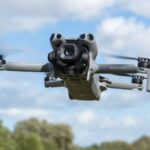
The DJI Air 3S stands out with its 1-inch CMOS primary camera, designed to handle low-light scenes like sunsets with ease. Its forward-facing LiDAR sensors make it safer to fly near buildings, a significant upgrade over the simpler optical sensors found in the MSMV 4K Dual Cam. Use the wide-angle panorama mode for expansive landscapes, or switch to the medium telephoto lens if you need to minimize distortion in your architectural shots.
This drone offers a 45-minute flight time, giving you plenty of time to scout locations and capture your footage. You can record cinematic 4K/60fps HDR video with 14 stops of dynamic range, which ensures you keep detail in bright clouds or deep shadows. If you lose GPS signal, the upgraded return-to-home algorithms intelligently select the safest path back to your location.
The Fly More Combo includes three intelligent flight batteries and an ND filter set to keep you in the air throughout the day. Don’t rely on your existing gear for power, as the 65W portable charger is sold separately and is essential for maintaining your flight schedule. If you’re shooting in high-contrast environments, prioritize the HDR mode to avoid losing texture in the sky.
Pros
- 1-inch CMOS primary sensor
- Advanced LiDAR obstacle sensing
- 45-minute max flight time
- Includes three batteries
Cons
- Battery charger sold separately
2. Autel Robotics EVO II Dual 640T V3
Best for: Industrial inspections and thermal imaging tasks.
The Autel Robotics EVO II Dual 640T V3 is built for precision work with its 640×512 thermal resolution. Unlike consumer drones focused on travel photography, this model includes ten thermal palettes and multiple temperature measurement modes to assist in firefighting, search and rescue, or infrastructure inspection.
The SkyLink 2.0 system provides a reliable video transmission range of up to 15km. It utilizes tri-band communication to automatically frequency hop, ensuring a stable signal in environments with high interference. With 38 minutes of flight time and 19 groups of sensors, it can map three-dimensional paths in real time.
Use the D-RI ranges function to distinguish between detection, recognition, and identification. If you need to verify an object’s intent or specific activity, rely on the identification setting. If you only need to confirm an object’s presence, use the detection mode to save processing power.
Pros
- 640×512 thermal imaging sensor
- 15km video transmission range
- 38-minute flight time
- Includes smart controller
Cons
- Professional setup required
- Complex thermal settings may exceed casual hobbyist needs
3. DJI Matrice 4T / Professional Drone with Thermal Imaging Camera
Best for: Professional mapping and survey operations.
The DJI Matrice 4T is a specialized professional drone equipped with an infrared thermal camera and a dedicated laser distance meter. It offers a triple-camera setup, including a wide-angle lens, a medium telephoto lens, and a telecamera, providing more versatility than the standard dual-lens configurations found in consumer models.
Each of the three 48MP sensors serves a distinct purpose. The wide-angle camera uses a 24mm equivalent lens with a fast f/1.7 aperture for broad coverage. The medium telephoto lens provides a 70mm view, while the dedicated telecamera reaches 168mm for distant inspection.
The laser distance meter measures ranges up to 1800m. If you’re performing oblique mapping, note that the range drops to 600m with a 1m blind spot. Use the 1800m setting for standard vertical distance checks to maintain the accuracy of ± (0.2 + 0.0015 × D) meters.
For low-light work, the auxiliary NIR light provides illumination up to 100m. This is a high-performance machine for those who need precise data, not for those looking for a simple recreational flyer. Beginners often underestimate the complexity of managing the thermal uncooled VOX microbolometer alongside the RTK module. If you lack experience with industrial-grade flight systems, the steep learning curve may delay your project timelines.
Pros
- Integrated laser distance meter
- A trio of distinct camera sensors
- Thermal imaging capabilities
- RTK module included
Cons
- High complexity for beginners
4. MSMV 4K Dual Cam
Best for: Beginners looking for a portable travel drone.
The MSMV 4K Dual Cam is designed for portability, featuring a lightweight frame that fits easily into a backpack. It’s much smaller than the DJI Matrice 4T and focuses on ease of use with its one-key takeoff and altitude hold features.
If you’re new to flying, use the Headless Mode to simplify direction control. When you need to capture a specific angle, adjust the lens 90° manually to switch between horizontal and vertical shots.
While it lacks the advanced obstacle avoidance of the DJI Air 3S, it includes two batteries to ensure you have more time for flying. Swap the batteries quickly to keep your session going without long interruptions. It’s a great starting point for those who want to practice aerial vlogging without a steep learning curve.
Pros
- Very lightweight and portable
- Two batteries included
- Beginner-friendly controls
- Includes carrying bag
Cons
- No advanced obstacle avoidance
- Manual lens adjustment only
5. Sonilco S1S Mini Drone with Dual Lens Camera
Best for: Pilots needing 4-sided obstacle avoidance.
The Sonilco S1S Mini includes infrared obstacle avoidance on four sides, which provides extra confidence for new pilots. This feature makes it more forgiving than the MSMV 4K Dual Cam, which relies more on manual control. If you’re flying in tight indoor spaces or near trees, keep the obstacle avoidance device attached to ensure the sensors remain active.
It uses a brushless motor for quieter operation and offers up to 36 minutes of total flight time with the included dual-battery setup. Each 1800mAh battery provides 18 minutes of airtime, so land the drone once the first battery drains to avoid a forced landing.
The Wi-Fi FPV transmission range is limited to 50 meters, while the remote control reaches up to 150 meters. If you lose the live video feed, you have likely exceeded the 50-meter limit, but you can still safely navigate the drone back using the one-key return function. Since the unit weighs only 145g, avoid flying in high winds that might push it beyond your control.
Pros
- 4-sided obstacle avoidance
- Quiet brushless motor
- Foldable design
- Two batteries included
Cons
- Limited Wi-Fi range
6. GPS Aerial Drone with Dual Camera for Adults 4K Video
Best for: Users who want a large integrated screen.
The GPS Aerial Dual Camera features a 7.2-inch touchscreen controller, meaning you don’t need to attach your phone to see the feed. This is a major convenience compared to drones that require a separate mobile device for full functionality. Because the controller includes 32GB of storage, you can preview, edit, and share your aerial footage directly on the device without transferring files.
With a 45-minute flight time per battery and a total of 90 minutes, it’s designed for long sessions. The listing doesn’t mention how weather affects flight time. It also includes a payload release mechanism for dropping items up to 300g. Don’t exceed this limit, as overloading the drone will compromise the stability of the 3-axis mechanical gimbal and EIS stabilization.
Pros
- 7.2-inch integrated touchscreen
- 90-minute total flight time
- 3-axis mechanical gimbal
- Payload release function
Cons
- Larger controller footprint
- Requires manual adherence to local flight rules
- Payload limit of 0.66 lbs
7. Contixo F21 Pro Drone with Dual Camera
Best for: First-time drone pilots on a budget.
The Contixo F21 Pro is a lightweight drone that weighs only 5.3oz, which means it doesn’t require FAA registration. Its remote controller includes a 4.3-inch screen, allowing for a self-contained flying experience without needing to sync a smartphone. If you want to avoid the hassle of connecting your phone or dealing with app compatibility issues, this controller is your primary advantage.
It features optical flow positioning for stable hovering, which helps beginners keep the drone steady. While its camera resolution is lower than premium models, it provides a simple, ready-to-fly kit that includes an SD card. The dual-camera setup offers a 60-degree field of view and an adjustable lens angle, which helps when framing shots from the air.
You get a pair of batteries providing 15 minutes of flight time each, totaling 30 minutes. The listing doesn’t mention obstacle avoidance for the Contixo F21 Pro. However, keep the drone within 240 feet to maintain a reliable video feed. Exceeding this distance will likely result in a loss of live footage, even if the drone remains within its 300-foot flight range.
8. 4K UHD GPS Drone (Equipped with dual cameras)
Best for: Long-duration flying with foldable convenience.
The 4K UHD Dual Camera offers a total flight time of 60 minutes using its multiple included batteries. It features a 540-degree obstacle avoidance system, which provides more coverage than the Sonilco S1S Mini. You can rely on the 110-degree wide-angle lens and 90-degree adjustable camera to capture high-resolution imagery.
The drone is designed to be compact and foldable, making it easy to store in the provided bag. Weighing less than 250 grams, it’s exempt from FAA registration. This makes it a solid choice for those who want a blend of long flight times and automated flight modes like orbit and follow-me. If you lose GPS signal, rely on the optical flow positioning to maintain stability.
Always check your battery levels before flight to maximize your 60-minute window. If the drone drifts, ensure you’re in a clear area to allow the 540-degree sensors to function correctly.
Pros
- 60 minutes flight time
- Foldable, lightweight design
- 540-degree obstacle avoidance
- 4K Ultra HD camera
Cons
- Requires careful battery management
9. OBEST Drone with Camera
Best for: Interactive and social flying.
The OBEST Dual Camera features a unique disc launch function that allows you to shoot lightweight discs while in flight. Because these discs are designed to be safe, they won’t scratch furniture or skin, making this a fun, interactive option that differs from the serious tone of the DJI Matrice 4T.
It also supports a 50x digital zoom via an app, which gives you more framing flexibility. You can switch between wide-angle and close-up shots using the 90-degree adjustable dual 1080P HD cameras. If you’re shooting for social media, utilize the APP beautify filter and gesture controls to capture selfies without touching the remote.
The included brushless motors provide stable flight and better wind resistance than brushed alternatives. However, the 15-minute flight time per battery means you should keep your spares charged to reach the 30-minute total limit. If you notice the drone drifting, the optical flow positioning should keep it steady during indoor or outdoor hovering.
Pros
- Unique disc launch feature
- 50x app-based zoom
- Brushless motor stability
- Includes 2 batteries
Cons
- Short 15-minute flight time per battery
10. ikaufen S156 Brushless Drone with Dual Camera
Best for: Pilots who want high zoom capability.
The ikaufen S156 Brushless drone features a 50x digital zoom on its dual-camera system, which is excellent for capturing distant subjects. It’s controlled via a 12.5cm screen remote, providing a clear view of your flight without a phone. If you’re flying in open spaces, use the 90° adjustable lens to frame shots from the air.
It’s built with an aviation-grade fuselage and propeller guards for extra protection. This makes it a durable option for beginners who might be worried about minor collisions during their first few flights. If you fly in low light, the integrated LED night lights help maintain visibility.
Most users mistake the optical flow hover for GPS-based flight. Optical flow relies on ground patterns to maintain position, so it works best over textured surfaces like grass or pavement. Don’t fly over water or featureless surfaces, as the drone may lose its stable hover.
Pros
- 50x digital zoom
- Large 12.5cm screen remote
- Durable propeller guards
- Brushless motor efficiency
Cons
- Limited to beginner-level specs
- Optical flow requires ground texture
How to Choose in Sixty Seconds
Screen vs. Smartphone
The biggest decision is whether you want a controller with a built-in screen or one that uses your smartphone. Built-in screens, like those on the GPS Aerial Dual Camera or Contixo F21 Pro, are ready to fly instantly and save your phone battery. However, smartphone-based controllers often offer better app integration and easier social media sharing. Always check if the drone requires a specific app that might not be compatible with your current phone model. Before operating any unmanned aircraft, you should verify all Federal Aviation Administration drone rules to ensure your flight is legal and safe.
Thermal vs. Standard
If you’re buying a drone for work, such as roof inspections or searching for wildlife, you need a thermal camera. Models like the Autel Robotics EVO II or DJI Matrice 4T are specifically engineered for these tasks. If your goal is travel vlogging, family videos, or hobby flying, a standard dual-lens drone like the DJI Air 3S will provide much better color accuracy and detail for your footage. For filming landscapes or vacations, standard cameras offer a much higher dynamic range.
Obstacle Avoidance Levels
Obstacle avoidance is a safety feature that helps prevent crashes. Basic drones use simple optical sensors, while advanced ones use LiDAR or 540-degree systems. If you’re a beginner, look for models like the Sonilco S1S Mini or the 4K UHD Dual Camera that offer multi-sided protection. This doesn’t make the drone crash-proof, but it does make it much safer to fly in tight spaces or near obstacles.
Frequently Asked Questions
Do I need to register my drone with the government?
Registration requirements depend on the weight of the drone. In the United States, any drone weighing 250 grams or more must be registered with the FAA for recreational use. Many mini-drones, such as the Contixo F21 Pro and the 4K UHD Dual Camera, weigh less than this threshold. Always verify the exact weight of your specific model before your first flight.
Can I fly these drones at night?
Night flight is possible, but it requires specific safety precautions. Many models, like the DJI Air 3S, include sensors specifically designed for nighttime stability and obstacle sensing. You must ensure your drone has visible lighting to help you maintain orientation. Always check local laws and ensure your drone’s firmware is updated to support safe night operations.
How do I switch between the dual lenses?
You can switch lenses using the remote controller, the mobile app, or the display menu on your screen. The DJI Matrice 4T, for example, allows you to toggle between thermal and visible sensors with a single tap. Always practice this in a safe, open area before attempting it during flight.
What happens if the drone loses signal?
Most modern drones feature an automatic Return-To-Home (RTH) function that uses GPS to navigate back to the takeoff point if the connection is lost. The DJI Air 3S uses advanced algorithms to intelligently select a route and avoid obstacles. Always ensure the “Home Point” is recorded before takeoff.
Conclusion
The DJI Air 3S remains the top choice for most users due to its excellent low-light camera performance and reliable safety sensors. For those who need a professional-grade tool with thermal capabilities, the Autel Robotics EVO II is the best alternative. Before you make your final choice, check the specific weight and controller requirements for your needs. Once you have selected your model, remember to download the latest firmware and practice your flight controls in an open field.