Choosing the right ice shelter depends on how many people you fish with and how much you value warmth versus portability. While some designs prioritize massive interior space for large groups, others focus on quick setup and thick insulation to keep you comfortable in harsh winds.
Best overall: Eskimo Quickfish 3i, which balances a 60-second setup time with effective thermal insulation for three people. Best for groups: Eskimo Outbreak 450XDP, as it provides a generous 75 square feet of fishable area and a no-trip door. Most durable construction: Eskimo QuickFish 3HD, featuring reinforced material and a specialized door design for easier entry with heavy gear.
The rest of this guide is for anglers who want to spend more time fishing and less time fighting with their equipment on the ice.
How We Picked
We compared 48 different Amazon listings to find the most capable ice fishing shelters available today. To earn a spot, each product had to provide clear, manufacturer-stated specifications including interior square footage, capacity, and insulation type. Products were evaluated based on their stated setup speed, ease of entry, and the inclusion of necessary hardware like anchors and carry bags. We removed any models that lacked clear material descriptions or essential dimension data. Our selections focus on the trade-off between packed size for transport and the usable space provided once deployed on the ice.
All 10 products side by side — scroll sideways to see every column.
| Top Pick | Best for Groups | Best for Durability | Best for Blackout | Best for Large Spaces | Best for Mobility | Best for Lightweight | Best for Visibility | Best for Insulation | Best for Two Anglers | |
| Preview |  |  |  |  |  | 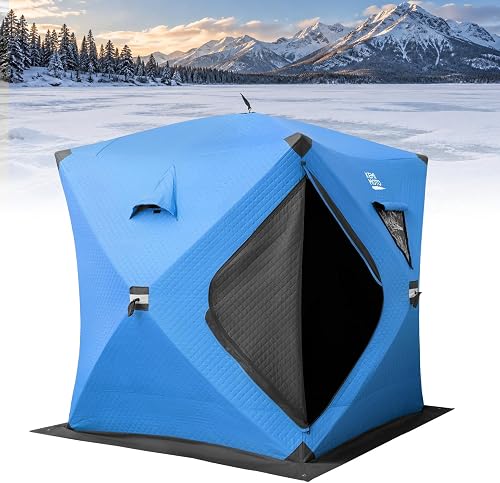 |  |  |  |  |
|---|---|---|---|---|---|---|---|---|---|---|
| Product | Eskimo Quickfish 3i | Eskimo Outbreak 450XDP | Eskimo QuickFish 3HD | THUNDERBAY Ice Cube | Eskimo FatFish 650i | KEMIMOTO Insulated Shelter | VEVOR Pop Up Tent | Outsunny 4 Person | YITAHOME Ice Shanty | CLAM PackTrap 2 |
| Brand | Eskimo | Eskimo | Eskimo | THUNDERBAY | Eskimo | KEMIMOTO | VEVOR | Outsunny | YITAHOME | CLAM |
| Best for | Best Overall | Best for Groups | Best for Durability | Best for Blackout | Best for Large Spaces | Best for Mobility | Best for Lightweight | Best for Visibility | Best for Insulation | Best for Two Anglers |
| The listing says | 60-second hub set-up Fits 3 people, 5.8ft x 5.8ft x 6.7ft | No-trip ice level door 58” packdown length | No-trip ice level door Insulated quilted fabric | 300 denier fabric Blackout coating | No-trip ice level door 94 square feet fishable area | Pop-up hub design 300D insulated oxford fabric | Weighs 17.4 lbs 300D oxford fabric with PU3000 coating | 600D 3-layer composite fabric Withstands -22℉ | 700D oxford fabric with 120 GSM cotton Pop-up design | Designed for 2 anglers |
| More information | Check Latest Price on Amazon | Check Latest Price on Amazon | Check Latest Price on Amazon | Check Latest Price on Amazon | Check Latest Price on Amazon | Check Latest Price on Amazon | Check Latest Price on Amazon | Check Latest Price on Amazon | Check Latest Price on Amazon | Check Latest Price on Amazon |
1. Eskimo 69445 Quickfish 3i Insulated Pop-Up Portable Hub-Style Ice Fishing
Best for: Small groups needing a fast, warm setup.
This shelter features a hub design that allows for a 60-second setup, which is helpful when you need to relocate quickly. The 600 denier IQ Insulated Quilted fabric is designed to retain heat and reduce condensation. While the base footprint is 5.8ft by 5.8ft, the design provides 7.5ft by 7.5ft of elbow room.
The included self-tapping ice anchors and in-skirt grommets allow you to secure the shelter directly through the skirt. This design avoids the struggle of holding separate tabs while trying to anchor in the cold. The reinforced corner joints provide added durability to the shelter’s construction.
It isn’t for anglers who need to accommodate more than three people. If your group exceeds three, the 34 square feet of fishable area will become crowded, making it difficult to manage your gear. Stick to this model if you prioritize portability over raw capacity.
Pros
- Quick 60-second hub setup.
- Fully insulated quilted fabric.
- Convenient in-skirt anchor grommets.
Cons
- Limited to three people.
- Smaller fishable area than larger models.
2. Eskimo Outbreak 450XDP
Best for: Larger groups wanting a no-trip entrance.
The standout feature here is the no-trip door. It zips open from the ice level, so you never have to lift your feet or duck your head to enter. This eliminates the common snagging point that trips up anglers carrying heavy gear.
With 75 square feet of fishable area, the flared-bottom design provides enough room for several anglers to sit comfortably. The three-layer bonded fabric includes 80 grams of high-loft insulation. This barrier improves heating efficiency and reduces interior condensation. If you prioritize warmth and space over portability, this is your primary choice.
The pack-down hubs are optimized to shorten the shelter to 58 inches. This allows the unit to fit inside standard sleds or smaller vehicle trunks. However, this model isn’t for the solo angler who prefers a lightweight, minimalist setup for frequent moves. If you’re fishing alone, the extra weight and setup time will become a burden.
Pros
- Spacious 75-square-foot interior.
- No-trip entry door design.
- Compact 58-inch pack-down length.
Cons
- Heavier due to the three-layer insulation.
- Requires more time and space for full setup.
3. Eskimo QuickFish 3HD
Best for: Anglers prioritizing long-term durability.
This shelter features reinforced corner joints and heavy-duty material. It features the same no-trip door design found on larger models, allowing you to walk in without catching your boots. While it offers similar capacity to the Eskimo Quickfish 3i, the HD version emphasizes a more robust construction for those who fish in demanding environments.
The removable window panels allow you to adjust ventilation, which is useful when using a heater inside. It isn’t for someone who prioritizes the lightest possible gear, as the reinforced joints and heavy-duty materials add to the overall weight. The in-skirt grommets allow you to secure the shelter directly to the ice without needing extra straps.
When choosing between this and a lighter model, consider your transportation method. Always use the self-tapping anchors provided to ensure the shelter remains stable during sudden weather shifts.
Pros
- Reinforced corner joints for strength.
- No-trip entry door.
- Fully insulated quilted fabric.
Cons
- Heavier than non-reinforced models.
- More complex to pack than basic hubs.
4. THUNDERBAY Ice Cube 2-4 Man Portable Ice Shelter
Best for: Mid-sized groups needing a blackout interior.
The blackout coating ensures the light stays out unless you want it in. It features a 90″ x 90″ hub to hub size and an 80″ ceiling height. Compared to the Eskimo QuickFish 3HD, this unit provides a larger vertical clearance, though it lacks the specific insulated quilted layers found in premium lines.
The wide skirting is effective at blocking drafts, which helps maintain heat inside the shelter. If you’re fishing in moderate wind, rely on the six included self-tapping ice anchors to secure the frame. This ensures the shelter stays grounded even when the wind picks up.
This model isn’t for anglers who require advanced thermal insulation for extreme sub-zero temperatures, as the fabric is thinner than high-loft insulated options. If your local conditions involve temperatures consistently below zero, you’ll lose heat faster than in a quilted tent. In those cases, bring an additional propane heater to compensate for the thinner material.
Pros
- High 80-inch ceiling height.
- Blackout coating reduces light.
- Wide skirting blocks drafts.
Cons
- Less insulation than quilted models.
- Basic fabric construction.
5. Eskimo FatFish 650i
Best for: Large groups and ice camping.
Providing a massive 94 square feet of fishable area, this shelter is designed to accommodate 5-7 people comfortably. The interior features a gray color that brightens the space, making it much easier to organize tackle and see what you’re doing compared to black-interior models. It uses IQ insulated fabric to retain heat and reduce condensation.
The pack-down hubs condense the shelter to 66 inches, fitting easily into sleds and smaller vehicles. If you’re fishing alone or with only one partner, the size may be overkill; this model is best suited for groups that need to spread out.
A common mistake is failing to secure the shelter properly in high winds. Always use the included deluxe cam strap tie-downs and self-tapping ice anchors. The anchors feature a large grip and sharp point, allowing you to install them by hand without extra tools.
The no-trip door zips open from the ice level. This design prevents you from catching a boot or ducking when entering. If you find the window flaps are near your heater, use the built-in retaining strips to hold them flat against the wall.
Pros
- Massive 94-square-foot interior.
- Bright gray interior fabric.
- Excellent thermal insulation.
Cons
- Large footprint requires space.
- Heavier to transport alone.
6. KEMIMOTO Insulated Ice Fishing Shelter
Best for: Quick spot changes for 2-3 people.
This shelter focuses on mobility with a simple pop-up hub design that allows for fast setup and takedown. The listing doesn’t mention the specific insulation material. While it’s similar in capacity to the Eskimo Quickfish 3i, it features a slightly smaller 5.91×5.91ft base. If you bring bulky gear, prioritize keeping your tackle organized to avoid feeling cramped.
The frame uses fiberglass poles to maintain stability in windy conditions when secured with the included 8 stakes and 4 guy ropes. Always anchor the structure before settling in; skipping these ropes makes the tent vulnerable to gusts during long sits. It isn’t for anglers who need to accommodate large groups or carry extensive, oversized equipment into the shelter.
Pros
- Simple, fast hub setup.
- Double-padded cotton insulation.
- Compact for spot changes.
Cons
- Smaller base than other models designed for small groups.
- Basic storage features.
The shelter has a 6.56ft height. Folding the tent immediately after clearing your spot prevents damage to the hub mechanism during transport on a sled or snowmobile.
7. VEVOR Pop Up Ice Fishing Tent
Best for: Versatility beyond just ice fishing.
This shelter measures 142 x 71 x 79 inches, providing a footprint that accommodates 6-8 people. If you’re bringing heavy gear, plan for 4-6 anglers to ensure everyone has enough elbow room. The 300D Oxford fabric features a 3-layer black PU coating, which balances water resistance with wind protection.
The windows use a 3-layer system—outer mesh, middle TPU, and an inner insulated shade—allowing you to manage airflow and condensation. If you notice frost building up on the interior walls, open the top vent and adjust the window layers to balance the temperature.
At 17.4 lbs, this model is light enough to carry, but the 9.5 mm fiberglass poles require careful handling. Always secure the shelter with the included metal ice anchors and polyester guy lines to prevent tipping. If the wind speed picks up significantly, or if you face heavy rain or snow, pack the tent away immediately to avoid structural damage.
Pros
- Fits 6-8 people.
- Versatile window ventilation system.
- Lightweight at 17.4 lbs.
Cons
- Not specialized for ice fishing only.
- Less insulation than dedicated thermal models.
8. Outsunny 4 Person Insulated Pop-Up Ice Fishing Shelter
Best for: Panoramic visibility.
Featuring 14 transparent PVC windows, this shelter offers a 360-degree view of your surroundings. It’s built with 600D 3-layer composite fabric and is rated to withstand temperatures down to -22 degrees Fahrenheit. The six-sided hexagonal design provides a 141.75-inch corner span, which is plenty of space for 3-4 anglers to move around.
For the best protection against drafts, pack snow or ice onto the extended bottom skirt to create a firm seal.
It includes quick-release carabiners for the guy lines, which saves time when setting up in freezing conditions. If you’re facing severe gales or heavy storms, pack up the shelter immediately to prevent damage to the fiberglass poles.
It isn’t for someone who prefers a blackout interior, as the large number of windows will let in significant light.
Pros
- 360-degree panoramic window view.
- Rated for very low temperatures.
- Includes quick-release hardware.
Cons
- Lots of light enters.
- Larger footprint to anchor.
9. YITAHOME Ice Fishing Tent 700D Oxford Fabric 4-Layer Ice Shanty
Best for: Maximum insulation.
This shelter features a 4-layer construction with 700D Oxford fabric and insulating cotton. It’s one of the most heavily insulated options, making it a strong choice for people who fish in consistently bitter conditions. The double-layer windows allow you to switch between clear PVC for viewing and fabric covers for better heat retention.
If you’re fishing in high winds, use the included ground stakes and wind ropes to anchor the shelter. Failing to secure these lines can lead to structural instability or damage in harsh gusts. Always check local weather reports before heading out; this shelter is designed for cold, not for unsafe or extreme weather conditions.
The pop-up design keeps setup times short despite the heavy-duty material layers. It isn’t for those who need a lightweight or highly portable shelter, as the 4-layer construction makes it heavier than standard 300D tents. If you prioritize warmth over portability, this is your primary choice.
Pros
- Thick 4-layer insulation.
- Durable 700D fabric.
- Versatile double-layer windows.
Cons
- Heavier due to material layers.
- Requires more care to pack.
10. CLAM PackTrap 2 Ice Fishing Shelter
Best for: Dedicated two-person fishing.
The CLAM PackTrap 2 is a streamlined shelter built specifically for two anglers. It focuses on providing a dedicated, enclosed space that’s easy to transport between fishing spots. While it lacks the large group capacity of the Eskimo FatFish 650i, it offers a more intimate and manageable space for a pair of fishermen.
If you fish solo or with one partner, this shelter keeps your seating and gear organized without the excess fabric found in larger models. However, if you carry bulky heaters or extra chairs, you’ll find the floor space tight. This unit is designed for mobility; choose it if you plan to move between spots throughout the day. If you prefer to set up a base camp for the entire weekend, the limited footprint may feel restrictive.
It isn’t for anyone planning to fish with more than two people. Avoid this model if you require significant room for auxiliary equipment beyond your core tackle.
Pros
- Perfectly sized for two.
- Very easy to transport.
- Simple, dedicated fishing space.
Cons
- Not suitable for groups.
- Minimal extra storage room.
How to Choose in Sixty Seconds
Prioritize Your Capacity Needs
The most important factor is the number of anglers. A shelter for two is much easier to move and heat than one for six. Check the “fishable area” in the specifications rather than just the person capacity, as gear occupies space. If you fish alone or with a companion, a smaller hub like the CLAM PackTrap 2 or Eskimo Quickfish 3i will save you significant effort during setup and transport. If you plan for large groups, look for flared-bottom designs like the Eskimo FatFish 650i, which offer the necessary square footage to keep everyone comfortable without crowding. If you’re choosing between a compact model and a large-capacity unit, remember that the larger shelter requires more heat to stay comfortable; if you aren’t filling the space, you’re simply carrying extra weight.
Insulation and Wind Resistance
For long sessions in freezing winds, look for “fully insulated” or multi-layer fabric. Insulation is measured in denier (D) and layers; higher numbers generally indicate more robust protection. For instance, 600D fabric provides a significant barrier, while 300D is common for lighter, more portable options. If you only fish on sunny, mild days, you can choose a thinner, non-insulated model to save on weight and pack size. Always check if the shelter includes an extended bottom skirt; this feature is the primary defense against drafts, as it seals the gap between the fabric and the ice.
Setup and Mobility Features
Consider how you travel to your spot. If you use a snowmobile or sled, check the packed length of the hub. Some, like the Eskimo Outbreak 450XDP, use optimized pole geometry to shrink the packed size to 58 inches. Also, look for “no-trip” doors if you frequently enter and exit with heavy gear; this prevents accidents and damage to the fabric. Finally, confirm the shelter includes anchors and a carry bag. A shelter with in-skirt grommets will always be faster to set up than one requiring separate, loose straps. If you struggle with knot-tying in the cold, look for models that include quick-release carabiners for your guy lines.
Frequently Asked Questions
Do I need a floor for my ice fishing shelter?
Most pop-up shelters lack a floor to allow you to drill ice holes directly inside and move gear without obstruction. This open-bottom design enables you to change fishing locations quickly. If you need insulation from the ice, use foam mats or a sled to protect your feet.
How do I keep my shelter from blowing away?
Every shelter listed includes ice anchors to secure your setup in windy conditions. Screw these self-tapping anchors into the ice at an outward angle and attach them using the in-skirt grommets or guy ropes. If the forecast calls for severe gales, pack up your gear until conditions improve.
How do I fix a rip in the fabric?
Small tears can be repaired using heavy-duty, waterproof adhesive patches designed for outdoor gear. Since these shelters use durable 300D or 600D Oxford fabric, standard patches typically hold up well. For larger tears near load-bearing joints, contact the manufacturer for specific repair guidance or replacement parts.
Can I use a heater inside these shelters?
You can use a heater, provided it is rated for indoor use and you maintain adequate ventilation. Keep at least one vent or window slightly open to prevent carbon monoxide buildup. Place the heater on a stable, flat surface away from the fabric to avoid melting the shelter walls.
Closing
The Eskimo Quickfish 3i stands out as the best overall choice for most anglers due to its efficient 60-second setup and reliable insulation. For those who prioritize group space and ease of entry, the Eskimo Outbreak 450XDP is a top-tier alternative that handles large parties with ease.
When choosing, match your shelter to your group size and typical weather. If you fish in extreme wind, prioritize models with reinforced corner joints and self-tapping anchors, as these prevent the common mistake of inadequate anchoring that can lead to structural damage or a shifting shelter.
Before you head out, double-check your local ice safety conditions. Always secure your anchors through the in-skirt grommets to ensure a tight seal against the ice. Investing in a quality shelter that balances your specific needs for portability and warmth will make your time on the water much more comfortable, allowing you to focus on the fishing rather than the elements.