Choosing a drone depends on whether you want a professional tool for filmmaking or a simple device for casual fun. The main differences lie in camera sensor size, stability features like obstacle sensing, and how much control you want to handle versus how much the drone does for you.
Best overall: DJI Mini 5 Pro, which combines a 1-inch CMOS sensor with omnidirectional obstacle sensing and 42GB of internal storage to provide a high-end experience for serious creators. Best for beginners: DJI Mini 4K, which offers essential features like one-tap takeoff and landing, GPS return-to-home, and an easy-to-use controller, making it the most approachable option for new pilots. Best for portability: DJI Neo, an ultra-light 135g drone that fits in a pocket and allows for palm takeoff and landing without the need for a separate controller.
The rest of this guide is for anyone looking to narrow down these choices based on their specific flying goals.
How We Picked
We compared 48 different drone listings to identify the best options currently available. To earn a spot, a product had to clearly state its key specifications, including camera resolution, flight time, and safety features like obstacle avoidance or GPS. We removed products that lacked consistent manufacturer data or failed to provide clear instructions on app compatibility and registration requirements. Our focus remained on verifiable features provided by the sellers to ensure you get exactly what is described.
All 10 products side by side — scroll sideways to see every column.
| Top Pick | Best for Vertical Shooting | Best for Wind | Best for Solo Travel | Best for Hands-Free | Best for Portability | Best for Long Range | Best for Beginners | |||
| Preview |  |  |  |  |  |  |  |  |  |  |
|---|---|---|---|---|---|---|---|---|---|---|
| Product | DJI Mini 5 Pro | DJI Mini 3 | DJI Mini 4K | DJI Neo | HOVERAir X1 | DJI Mini 2 SE | Specta Mini Drone | Ruko U11MINI | Holy Stone Mini | FPV Mini Brushless |
| Brand | DJI | DJI | DJI | DJI | HOVERAir | DJI | SPECTA | Ruko | Holy Stone | lanvansrc |
| Best for | Best Overall | Best for Vertical Shooting | Best for Wind | Best for Solo Travel | Best for Hands-Free | Best for Portability | Best for Long Range | — | Best for Beginners | — |
| The listing says | Palm-sized foldable design with 42GB storage 1-inch CMOS sensor with 4K/60fps HDR | Under 249 g, no registration required 4K HDR video with dual native ISO | Under 249 g, no registration required 4K resolution with 3-axis gimbal | Ultra-light 135g, no registration required Palm takeoff and landing | Follows subjects up to 15 mph Compatible with Android 10.0 and iOS 12.1 | Includes charging hub and shoulder bag Compact and portable design | 4K/30fps video recording 6.2-mile transmission range | Integrated 5.5-inch 1080P touchscreen controller 1/2-inch CMOS sensor, 8K photos, 4K video | 1080P HD camera with WiFi FPV 360° flips and one-key takeoff | Built-in LCD screen remote controller 1080P EIS camera with 90° adjustment |
| More information | Price on Amazon | Price on Amazon | Price on Amazon | Price on Amazon | Price on Amazon | Price on Amazon | Price on Amazon | Price on Amazon | Price on Amazon | Price on Amazon |
1. DJI Mini 5 Pro Fly More Combo Plus with DJI
Best for: Advanced content creators wanting professional footage.
The DJI Mini 5 Pro stands out due to its 1-inch CMOS sensor, which captures 4K/60fps video with significant detail. It includes advanced features like omnidirectional obstacle sensing and ActiveTrack 360°, which are useful for tracking subjects during active sports. The inclusion of 42GB of internal storage ensures you can keep recording even if you run out of space on your memory card.
If you’re flying at night, rely on the forward-facing LiDAR and vision sensors to detect obstacles in all directions. This adds a critical layer of safety for return-to-home maneuvers.
The foldable design makes it compact enough to carry easily, though the advanced tech means there’s a learning curve for those new to drone piloting. This model is designed specifically for those who need high-quality aerial imagery. Because the DJI Fly app isn’t on Google Play, you must download it directly from the official DJI website to ensure compatibility.
Pros
- High-quality 1-inch CMOS sensor.
- Omnidirectional obstacle sensing for safety.
- Internal storage for uninterrupted recording.
Cons
- Requires app download from official website.
- Advanced features may overwhelm new pilots.
2. DJI Mini 3
Best for: Pilots who prioritize vertical video composition.
This drone features True Vertical Shooting, making it ideal for capturing tall landmarks or social media content without cropping. Its 3-axis mechanical gimbal ensures that the 4K imagery remains smooth even when flying in conditions with moderate wind.
If you fly for recreational purposes, you avoid the burden of FAA registration and Remote ID because the aircraft weighs under 249g. However, if you opt for the Intelligent Flight Battery Plus to extend your flight time to 51 minutes, the drone exceeds this weight limit. In that case, you must comply with all standard registration requirements.
While it’s very capable, it doesn’t include the complex obstacle-sensing arrays found on advanced professional models. It isn’t for the user who demands full 360-degree collision avoidance, as this model focuses on stability and image quality rather than total automated safety.
Pros
- Excellent for vertical social media content.
- Solid 3-axis mechanical gimbal stability.
- Impressive wind resistance for its size.
Cons
- Lacks complex obstacle avoidance sensors.
- Higher weight with extended battery.
3. DJI Mini 4K
Best for: First-time pilots needing a reliable starter drone.
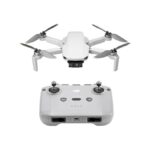
The DJI Mini 4K provides a straightforward entry into 4K filming with its 3-axis gimbal and stable hovering. It’s designed for ease of use, featuring one-tap takeoff and landing to remove the stress of manual operation. The inclusion of QuickShots allows users to capture cinematic movements like Helix or Rocket with just a few taps.
Because it weighs under 249 grams, you don’t need FAA registration or Remote ID for recreational flights. If you plan to fly commercially, check the official FAA website for different requirements. The drone handles Level 5 winds, but it lacks the advanced obstacle-avoidance sensors found on premium models. It isn’t for experienced cinematographers who require high-speed subject tracking for professional production.
Pros
- Very easy for beginners to operate.
- Reliable GPS return-to-home function.
- Cinematic 4K video quality.
Cons
- Limited automated flight tracking features.
- App must be downloaded from the DJI website, as it isn’t on the Google Play store.
4. DJI Neo
Best for: Solo travelers wanting a controller-free experience.
The DJI Neo is unique because it weighs only 135g and can take off and land directly from your palm. It’s designed for those who want to capture quick vlogs or family moments without the hassle of setting up a complex controller. Its full-coverage propeller guards make it a safe choice for flying near people or in tighter spaces.
If you’re a beginner, prioritize the propeller guards to navigate around tree branches or indoor obstacles without fear. However, you must visit the DJI official website to download the Fly app before your first flight, as it isn’t available on Google Play.
While it offers 4K video, it’s physically smaller and lighter than other drones. This affects its performance in high winds, though it maintains stability up to level-4 wind resistance. It isn’t for the user who needs long-range professional transmission or high-speed performance for racing. If you require complex distance filming, choose a heavier model.
Pros
- Extremely lightweight and portable.
- Safe palm takeoff and landing.
- No controller required for basic use.
Cons
- Lower wind resistance than larger drones.
- Performance limited by small size.
- Requires manual app installation.
5. HOVERAir X1 Drone with Camera
Best for: Vloggers and hikers wanting hands-free filming.
The HOVERAir X1 is built specifically for automatic, self-flying flight paths like Orbit or Bird’s Eye. It’s a fully enclosed drone, which provides a high level of safety when flying at close range to the subject. With 32GB of internal storage, you don’t need to worry about managing external SD cards while on the trail.
Because it relies on pre-programmed paths and tracking, it isn’t designed for traditional manual drone piloting. It isn’t for the user who wants to practice complex manual maneuvers or fly at high speeds, as this drone is primarily an automated camera platform.
Pros
- Fully enclosed for enhanced safety.
- Excellent automated tracking modes.
- No need for SD cards.
Cons
- Not designed for manual flight.
- Video resolution capped at 2.7K.
6. DJI Mini 2 SE Fly More Combo
Best for: Travelers needing long flight times.
The DJI Mini 2 SE is a compact travel companion that focuses on reliability and flight duration. The Fly More Combo includes three batteries, providing a total of 93 minutes of flight time. Its two-way charging hub charges these batteries in sequence and doubles as a mobile power source for your remote or smartphone.
The 4x zoom allows you to transition between shots of varying distances and compositions without moving the drone. If you plan to fly indoors or in complex areas with obstacles, use the 360-degree propeller guard to prevent damage.
It’s a capable mid-range drone, but it doesn’t offer the 4K resolution found in higher-tier models. Choose this drone if portability and flight endurance are your primary concerns. It isn’t for the filmmaker who requires 4K footage for high-resolution editing or large-screen displays.
Pros
- Excellent battery management system.
- Convenient for extended travel.
- 4x zoom provides flexible composition.
Cons
- Maximum video resolution is lower than 4K.
- Older flight tech compared to newer models.
7. Specta Mini Drone with Camera 4K
Best for: Beginners who fly in windy conditions.
This drone is built with Level 5 wind resistance, helping it stay stable during outdoor adventures on trails or lakesides. It offers a 6.2-mile transmission range, which is quite generous for a drone in this category. The inclusion of three batteries ensures you can get up to 96 minutes of total flight time during a single outing.
If you’re flying in calm, open fields, you can rely on the GPS auto-return to bring the unit home safely. However, if you’re flying near trees or complex obstacles, stay alert. This model lacks the sophisticated obstacle-sensing software found on premium DJI models. If you expect automated collision avoidance to save you from tight spots, you’ll be disappointed. This drone requires active pilot skill and manual control to ensure safety.
Pros
- The drone is engineered to maintain stability even in gusty conditions.
- Long-range 6.2-mile video transmission.
- Multiple batteries are included to keep you in the air for longer sessions.
Cons
- No sophisticated obstacle-sensing software.
- Requires manual pilot oversight for safety.
- Heavier reliance on pilot skill than premium alternatives.
8. Ruko U11MINI 4K (RC3) Camera Drone
Best for: Users who want a standalone touchscreen controller.
The Ruko U11MINI includes a 5.5-inch 1080P touchscreen remote, meaning you never have to tether your phone or deal with app distractions. It also supports 8K photo capture and 4K video, providing high-resolution options for still images. The four-way positioning system ensures stable hovering, which is helpful for beginners.
The integrated screen is a major convenience, but it makes the controller significantly larger than standard non-screen remotes. It isn’t for the user who prefers a minimalist, pocket-sized controller setup, as the screen requires more storage space in your gear bag.
If you’re flying in remote areas, rely on the R2 digital system. It provides a 20,000ft transmission range without needing Wi-Fi, ensuring a lag-free feed. While the drone weighs under 249g to remain FAA-exempt, remember that you must use a PD 3.0 fast charger to fully utilize the 64-minute flight time provided by the two included batteries.
Pros
- Integrated touchscreen eliminates phone reliance.
- High-resolution 8K photo capability.
- Stable hover with quadruple positioning.
Cons
- Controller is bulkier than standard remotes.
- PD charger recommended for best performance.
9. Holy Stone Mini FPV Drone with 1080P HD Camera
Best for: Young children and first-time indoor pilots.
The Holy Stone Mini is a small, durable quadcopter designed for indoor play. It features 360-degree propeller guards, which protect the blades and your home from contact. With three adjustable speed levels and 3D flip capabilities, it’s a tool that grows as a child’s flying skills improve.
Optical flow positioning provides steady auto-hovering, which is essential for beginners who struggle with manual drift. If you’re flying in a cramped living room, prioritize using the headless mode to keep orientation simple. If the drone feels sluggish, toggle to the highest speed setting to gain better responsiveness.
Because it’s a toy-grade drone, its 1080P camera is for casual use rather than professional cinematography. It isn’t for the user who wants to capture high-quality cinematic footage or fly long distances outdoors in varying wind conditions. Always monitor your flight time, as the three modular batteries provide only 15 minutes of total airtime.
Pros
- Full propeller guards for safety.
- The package comes with extra batteries to extend your playtime.
Cons
- Camera quality is for casual use.
- Not suitable for outdoor long-range flight.
10. FPV Mini Brushless
Best for: Pilots who want FPV without a smartphone.
This drone comes with an LCD screen remote controller, providing a direct FPV experience without needing to connect a smartphone or app. The brushless motors provide a smoother, quieter, and more responsive flight than brushed motor alternatives. It is a great middle-ground for someone who wants a dedicated FPV monitor without the complexity of a full goggle system.
Because this model weighs under 249g, you avoid the complexity of FAA registration for recreational use. If you’re flying in light wind, the brushless motors offer better stability than toy-grade drones. However, if you encounter strong gusts, land immediately to avoid losing control, as this unit lacks the heavy-duty stabilization found in professional gear.
It lacks the sophisticated GPS and obstacle-sensing features found in top-tier drones, so it’s best suited for open spaces. It isn’t for the photographer who needs automated flight paths or high-end cinematic stabilization, as its focus is on the FPV flying experience. Use the 90° adjustable camera angle to capture landscapes, but keep the drone within visual range since it lacks advanced return-to-home safety protocols.
Pros
- Dedicated LCD screen remote controller.
- Efficient and quiet brushless motors.
- No phone connection required.
Cons
- Lacks advanced GPS safety features.
- Camera quality is suited for casual use.
How to Choose in Sixty Seconds
Which drone safety features actually matter for a beginner?
For a beginner, the most important feature is GPS-assisted hovering and a reliable “Return to Home” function. These tools prevent the drone from drifting away if you lose orientation or if the signal is interrupted. While obstacle sensing is helpful, it shouldn’t replace careful flying; it’s a backup, not a license to fly blindly. Before you order, always check the Federal Aviation Administration guidelines for the latest rules on drone registration and Remote ID. Many mini drones under 249g are exempt from registration for recreational use, but these rules change, so checking the official source is the only way to stay compliant and avoid potential legal issues.
Do I really need a dedicated remote with a screen?
A dedicated screen remote is excellent if you want to avoid “app anxiety,” where you worry about phone notifications, battery drain, or connection issues during flight. It’s the best choice for tech-minimalists who want a “grab and go” experience. However, these controllers are bulkier than standard remotes. If you already have a high-quality smartphone with a bright screen, a standard remote is usually lighter and more portable. If you choose a drone that requires a smartphone app, always confirm that your phone’s operating system meets the latest compatibility requirements before you finalize your purchase to ensure a smooth setup.
How much flight time is enough for a typical session?
Most pilots find that 20 to 30 minutes of flight time per battery is the “sweet spot” for a productive session. If a drone offers less than 15 minutes, you will spend more time landing and swapping batteries than actually filming. Look for “Fly More” combos, which often include a multi-battery set, allowing for nearly an hour of total flight time. This is usually plenty for a morning of hiking or a family event. If you plan to travel, ensure the drone includes a charging hub that can charge multiple batteries in sequence, as this is far more convenient than charging one at a time via a USB cable.
The latest flagship model remains the top choice for those wanting the best camera and safety technology, while the DJI Mini 4K is the most reliable entry-point for new pilots. If you need something for casual vlogging, the DJI Neo is a great alternative. Before you buy, check your local area for any flight restrictions, as even the best drone can’t overcome a local “no-fly” zone. Always keep your batteries charged and your firmware updated to ensure the best performance. Happy flying!
Related guides
- 10 Best Night Vision Fishing Cameras for Clear Underwater Views
- Top Rated Security Cameras: Enhance Home Safety with Advanced Features
- Best Camera Drone Under 200
Frequently Asked Questions
What does owning a mini drone ask of the buyer after the purchase?
Regular maintenance primarily involves keeping the firmware updated via the manufacturer app. You should also inspect propellers for damage before every flight to ensure stability. Note that failing to manage battery storage can degrade capacity over time.
What is the first thing that usually goes wrong with a mini drone?
The most common issue is propeller damage caused by minor collisions. Most models include spare propellers in the box to address this. Always monitor your battery percentage closely to initiate the return-to-home sequence before power reaches critical levels.
Is the simplest drone on the list enough for a beginner?
Beginners should start with simple models like the DJI Mini 4K or Holy Stone Mini. These drones include essential safety features like auto-hover and one-key landing to simplify the learning process. You can upgrade to advanced sensors once you master basic flight controls.
What should I confirm before ordering a drone?
Confirm your smartphone is compatible with the drone’s official app before ordering. You should also verify if the drone requires a separate high-speed microSD card for storage. Finally, check if the drone’s weight requires you to register it with your national aviation authority.
Conclusion
Once you’ve picked your favorite model, don’t forget to check your local flight regulations before heading outside. It’s always a good idea to practice your takeoff and landing in an open, grassy park first. You’ll be capturing stunning aerial views in no time, so get out there and enjoy the sky!