Choosing the right drone is about finding the balance between flight stability, camera quality, and how much gear you want to carry. While many drones offer high-resolution video, the real differences lie in their obstacle-avoidance sensors, transmission range, and ease of use for beginners.
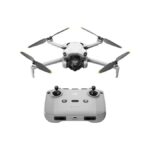
Best overall: DJI Mini 4K offers a great mix of cinematic 4K video, 3-axis stabilization, and beginner-friendly flight modes, all in a compact frame that avoids complex registration requirements for recreational hobbyists.
Most advanced features: DJI Mini 4 Pro provides omnidirectional obstacle sensing, 4K/60fps HDR video, and ActiveTrack 360°, making it the top choice for those who need professional-grade tracking and safety sensors in a small package.
Best ultra-portable: DJI Neo is a unique, lightweight drone that allows for palm takeoff and landing, making it perfect for quick, spontaneous vlogs without the need for a controller during casual outings.
This guide is for anyone looking to capture high-quality aerial footage, whether they’re a total novice or a pilot seeking an upgrade to their existing gear.
How We Picked
To earn a place in this drone roundup, each model had to clearly state its camera resolution, flight stability features, and weight specifications. Our selections focus on the value provided by the specific hardware and software included in the box.
All 10 products side by side — scroll sideways to see every column.
| Top Pick | Best for Obstacle Sensing | Best for Vlogging | Best for Long Range | Best for Night Flights | Best for Gusty Weather | Best for Beginners | Best for Long Flights | Best for Travel | ||
| Preview |  |  |  |  |  |  |  |  |  |  |
|---|---|---|---|---|---|---|---|---|---|---|
| Product | DJI Mini 4K | DJI Mini 4 Pro | DJI Neo | Potensic ATOM | DJI Air 3S | Bwine F7MINI | Holy Stone HS360S | GPS Drone 4K | Potensic ATOM SE | Holy Stone HS175D |
| Brand | DJI | DJI | DJI | Potensic | DJI | Bwine | Holy Stone | sllcll | Potensic | Holy Stone |
| Best for | Best Overall | Best for Obstacle Sensing | Best for Vlogging | Best for Long Range | Best for Night Flights | Best for Gusty Weather | Best for Beginners | — | Best for Long Flights | Best for Travel |
| The listing says | Under 249 g, no registration required 4K resolution with 3-axis gimbal | Under 249 g, no registration required 4K/60fps HDR vertical video | 135g weight, no registration required Palm takeoff and landing | 4K/30fps camera with 3-axis gimbal 6 KM transmission range | 1" CMOS primary camera 4K/60fps HDR video | Under 249g, no registration required 48MP 1/2" CMOS, 4K/30fps video | Under 250g, no registration required 4K 85° wide-angle camera | 4.5-inch screen remote controller 4K UHD camera with FPV transmission | Under 249g, level-5 wind resistance 4K/30fps camera with 1/3’’ CMOS sensor | 4K camera with 110° wide-angle lens 90° adjustable camera angle |
| More information | Buy on Amazon | Buy on Amazon | Buy on Amazon | Buy on Amazon | Buy on Amazon | Buy on Amazon | Buy on Amazon | Buy on Amazon | Buy on Amazon | Buy on Amazon |
1. DJI Mini 4K
Best for: Beginners wanting high-quality video without registration.
This drone is built for simplicity. With its 3-axis gimbal and 4K resolution, it keeps your footage steady even during windy conditions. It supports automatic flight paths like Dronie and Rocket, which help you get professional-looking shots with just a few taps on your phone.
The lightweight design means you can fly it recreationally without needing to complete complex government registrations. Because it weighs under 249 grams, you skip FAA registration and Remote ID requirements for recreational use. Always check the official FAA website to confirm current rules before your first flight.
It’s a solid, reliable tool for capturing sunsets or family events, though it lacks advanced obstacle-sensing sensors. If you plan to fly near trees or structures, you must be extra cautious since the drone can’t automatically detect or avoid these hazards.
The drone handles Level 5 winds and altitudes up to 4,000 meters thanks to its brushless motors. If you want longer flight times, choose the two-battery or three-battery sets to extend your time in the air from 31 minutes up to 93 minutes.
Pros
- Under 249g weight
- 3-axis gimbal stabilization
- Automatic QuickShots modes
Cons
- No obstacle avoidance sensors
2. DJI Mini 4 Pro Fly More Combo with DJI RC
Best for: Pilots needing advanced safety and tracking.
This model is packed with technology. The omnidirectional obstacle sensing is a major benefit for new pilots, as it helps the drone detect and avoid objects while flying. The 4K/60fps HDR video ensures that your footage remains clear and detailed even in difficult lighting like sunrises or night scenes.
The ActiveTrack 360° feature is excellent for capturing yourself in action without needing to manually fly the drone. It’s a powerful choice for those who want the most capable features available, though the high level of tech might be more than what a casual flyer needs.
Pros
- Omnidirectional obstacle sensing
- High-frame-rate 4K HDR
- Advanced ActiveTrack 360°
Cons
- Requires learning complex settings
3. DJI Neo
Best for: Vlogging and casual social media clips.
DJI Neo changes how you approach flight. It’s small enough to fit in a pocket and can take off directly from your palm. You don’t even need a controller to get started, which makes it perfect for BBQs or hiking trips where you want quick, stabilized footage without setting up a full system.
At just 135g, the drone avoids the need for FAA registration and Remote ID. If you plan to use it for travel, this weight makes it a stress-free addition to your gear. Always download the DJI Fly app directly from the official website before your first flight, as it’s no longer available on the Google Play Store.
It includes built-in propeller guards, which provide extra protection when flying near people or through tight spaces. You can fly with confidence around tree branches or at home. While it handles level-4 wind resistance, remember this isn’t a long-range exploration drone. It’s a specialized tool for capturing yourself on the go.
If you want to film a birthday or a picnic, choose the controller-free mode for simplicity. For more precise movements, switch to the mobile app, voice control, or a dedicated RC.
Pros
- Palm takeoff and landing
- Very lightweight design
- Full-coverage propeller guards
- Eight creative QuickShots modes
Cons
- Requires manual app download from DJI website
- Not intended for long-range flight
4. Potensic ATOM 4K GPS Drone
Best for: Users needing long-distance transmission.
The Potensic ATOM stands out for its transmission range, which reaches up to 6km. This allows you to explore vast areas with confidence. The mechanical gimbal stabilization combined with the Sony CMOS sensor delivers stable, clear video even when the winds pick up to level 5.
It comes with a fast-charging hub that can charge three batteries at once, which is a big time-saver during long shooting days. While it offers great range, it’s best suited for those who are comfortable navigating with a dedicated remote controller.
Pros
- Long 6km transmission range
- Fast-charging battery hub
- Smooth, stabilized camera movement
Cons
- Heavier than ultra-mini drones
5. DJI Air 3S Fly More Combo
Best for: Professionals needing low-light performance.
This drone features a large 1-inch CMOS sensor, which is a major advantage for capturing detail in dark environments like nightscapes. It also includes forward-facing LiDAR to help with nighttime obstacle sensing, making it much safer to fly in dim conditions. If you’re shooting during sunrise or sunset, use the 4K/60fps HDR mode to capture up to 14 stops of dynamic range. This prevents the loss of intricate cloud textures that often wash out in standard settings.
The 45-minute flight time gives you plenty of room to scout locations and perfect your shots. Use the medium tele lens for panoramas if you need to minimize distortion, or switch to the wide-angle mode for a broader scope. It’s a professional-grade machine, so it’s quite an investment for someone who is just trying out drone photography for the first time. If you do purchase this kit, remember that the 65W charger is sold separately. You must buy it to keep your three batteries powered for extended field sessions.
Pros
- Large 1-inch CMOS sensor
- Excellent nighttime obstacle sensing
- Long 45-minute flight time
Cons
- Battery charger sold separately
6. Bwine F7MINI 4K Video 8K Photo Drones with Camera
Best for: Reliability in gusty weather.
The Bwine F7MINI is built to handle wind. Its brushless motors and mechanical stabilization work together to keep the camera steady even when you’re flying in blustery conditions. You can rely on this stability for professional real estate shots or mountain flights, even when the air is moving at 31mph.
It offers a 6km transmission range, ensuring you stay connected to your drone while scouting from a distance. Because this uses wired digital transmission, you avoid the signal loss common in wireless-only systems.
The inclusion of an ultra-safe locator buzzer is a vital safety net if you ever lose sight of the drone. If the device goes down, the 120dB alarm helps you find it quickly in tall grass or brush.
It’s a capable all-rounder, though you must manage three separate batteries to reach the total 96-minute flight time. Remember that one battery arrives pre-installed, while the others are packed separately. If you need to stay airborne for long sessions, charge all three via PD 3.0 to banish range anxiety.
Pros
- Strong wind resistance
- Long transmission range
- Includes locator buzzer
Cons
- Multiple batteries for full runtime
7. Holy Stone GPS Drone with 4K UHD Camera
Best for: Novices practicing flight skills.
The Holy Stone HS360S is designed with beginners in mind. It weighs less than 250g, which means you can fly it in the States without the hassle of FAA or Remote ID registration. The drone uses an enhanced controller that connects to your phone with a single cable, simplifying the setup process while providing real-time streaming without needing WiFi.
GPS positioning and a smart return-to-home feature provide a critical safety net. If your battery runs low or the connection breaks, the drone automatically navigates back to its starting point. Use the beginner mode and optical flow positioning to practice your flight control skills before attempting advanced maneuvers.
It offers several automated flight modes like “Spiral Up,” “Catapult,” and “1-Tap Ascension.” These make it easy to get cinematic shots without advanced piloting skills. While this is a great starting point, the 20-minute flight time per modular battery is shorter than some other options. If you plan to spend the day filming, carry extra batteries to avoid frequent downtime.
Pros
- No FAA or Remote ID registration required
- Simple wired controller setup
- Precise GPS and return-to-home safety
- Automated flight modes for cinematic shots
Cons
- 20-minute flight time per battery
- Requires extra batteries for longer sessions
8. GPS Drone with 4K Camera
Best for: Users who prefer a dedicated flight experience without relying on a smartphone.
This drone includes a remote with a built-in 4.5-inch screen. You avoid the common frustration of drained phone batteries, distracting notifications, or app compatibility issues. It ensures your flight remains uninterrupted by incoming calls or messages, providing a clean, focused view of the live feed.
The dual-battery setup provides approximately 60 minutes of total flight time. This is a significant advantage for extended outings, as it allows for more time in the air and less time waiting for a recharge.
If you’re flying outdoors, ensure you use the GPS positioning mode to activate the three return-to-home safety features. These include one-click return, low battery alerts, and automatic return if you lose signal. If you move indoors, switch to optical flow mode to maintain stable hovering and precise positioning.
Because the drone weighs under 249g, you avoid complex FAA registration requirements. This makes it a portable option for hiking or travel. However, remember that the built-in screen resolution is designed for utility rather than the high-definition clarity of a modern flagship smartphone.
Pros
- Remote with built-in screen
- No phone connection required
- 60 minutes of total flight time
- Under 249g for easy travel
Cons
- Screen resolution is basic
- Not for users seeking high-end display quality
9. Potensic ATOM SE GPS Drone with 4K EIS Camera
Best for: Long-duration flight sessions.
If you hate changing batteries, the Potensic ATOM SE is a strong contender. With two batteries included, you get 62 minutes of total flight time. It uses electronic image stabilization (EIS) to smooth out your footage, and it can reach speeds of 16m/s in Sport Mode.
The drone weighs under 249g, which means you avoid FAA and Remote ID registration requirements. Its brushless motor design allows it to resist level-5 winds, keeping the craft stable even when the air isn’t perfectly calm.
It folds down small enough to fit in a jacket pocket, making it easy to bring on any trip. While it lacks a mechanical gimbal, the software stabilization and 1/3’’ Sony CMOS sensor do a respectable job for casual video needs. Use Beginner Mode to learn the controls, then switch to Normal or Sport modes as your confidence grows.
Pros
- 62 minutes total flight time
- High-speed Sport Mode
- Under 249g for registration ease
Cons
- Uses EIS instead of a mechanical gimbal
- Micro SD card not included
10. Holy Stone HS175D GPS Drone with 4K Camera
Best for: Portability and travel.
The HS175D is a classic foldable drone that fits easily into a carrying case. It offers 5GHz FPV transmission, which keeps the live view on your phone smooth and stable. The 90-degree adjustable camera angle helps you frame your shots easily while in the air.
If you’re flying in open areas, the GPS-assisted Auto Return is essential. It triggers automatically if the signal drops, the drone goes out of range, or the battery hits a low level. Relying on this feature prevents the common mistake of losing your aircraft during long-distance exploration.
You get 46 minutes of total flight time using the two included batteries. However, actual duration depends heavily on wind and flight conditions. If you notice the drone struggling to maintain position, land immediately to preserve battery life.
It includes beginner features like headless mode and altitude hold, which make it approachable for new pilots. It’s a simple, effective tool for vacation photos and family gatherings.
Pros
- Compact foldable design
- Smooth 5GHz FPV view
- Good beginner flight modes
Cons
- Basic camera stabilization
How to Choose in Sixty Seconds
Which registration rules apply to me?
Most drones under 249 grams are exempt from FAA registration for recreational use, which makes them the most popular choice for beginners. You can find the specific FAA drone registration requirements on the official government website. Always verify the current weight of the drone you’re buying, including the battery and any propeller guards. If you plan to fly for commercial purposes, you may need to register regardless of the weight. Always check local laws before your first flight, as some parks and cities have their own rules about where drones are allowed to take off or land.
Is a dedicated screen better than a phone?
Using a remote with a built-in screen offers a distraction-free experience, as you won’t be interrupted by texts or social media notifications while flying. It also removes the need to worry about your phone’s battery life or app compatibility. However, high-end smartphones often have much brighter, higher-resolution screens than those built into standard drone controllers. If you prefer a seamless, “ready to go” setup, a built-in screen is great. If you prioritize image clarity and want to view your footage in the highest possible detail while flying, using your smartphone with the drone’s app is usually the better path.
Do I really need obstacle avoidance?
Obstacle avoidance sensors are a major safety feature for new pilots. They help the drone detect walls, trees, or other objects and stop before a collision occurs. If you plan to fly in tight spaces or near obstacles, these sensors can save your drone from a crash. If you primarily fly in open fields or wide-open landscapes, you might not need these sensors. Keep in mind that entry-level drones without sensors rely entirely on your piloting skills, so you must be more cautious during takeoff, landing, and flight. Always practice in a large, empty area until you feel confident with the controls.
Related guides
- 10 Best Camera Drone Under 500 Picks for Quality Aerial Shots
- 10 Best High End Home Security Cameras: Top Wireless Outdoor Picks
- 10 Best Indoor Smart Security Camera: Enhance Home Safety with Top Models
Frequently Asked Questions
What happens if I lose my drone?
Most modern drones use GPS to automatically return to their takeoff point if the connection drops or the battery runs low. The Bwine F7MINI also includes an integrated locator buzzer to help you find it in tall grass. Always confirm a solid GPS lock before takeoff to ensure these safety features function.
How do I maintain my drone batteries?
To keep your flight batteries healthy, you should avoid storing them fully charged for long periods. Use the provided charging hubs to ensure you’re charging at the correct voltage and speed. Always inspect your batteries for physical damage or swelling before every flight.
Is the simplest drone on this list enough?
Simple drones like the DJI Neo are ideal for capturing quick, stabilized clips without complex controller settings. They are perfect for casual users recording memories at gatherings or while hiking. If you require professional photography or long-range flight, consider upgrading to a model with a 3-axis gimbal later.
What should I do before my first flight?
Always check weather conditions before flying, as high winds can make small drones difficult to control. Review your manual to perform a compass calibration, which ensures the GPS functions correctly. Taking time to read the manual and practice in a safe, open area will keep your drone secure.
Conclusion
Ultimately, the perfect drone is the one you’ll actually take outside to capture your adventures. Don’t get stuck overthinking the technical specs; just pick the model that fits your budget and head to a local park. You’ll find that once you’re in the air, you won’t regret the journey.